Disclosure: This post may contain affiliate links. If you buy through our links, we may earn a small commission at no extra cost to you. We only point readers toward practical product categories and buying checks, not universal fixes.
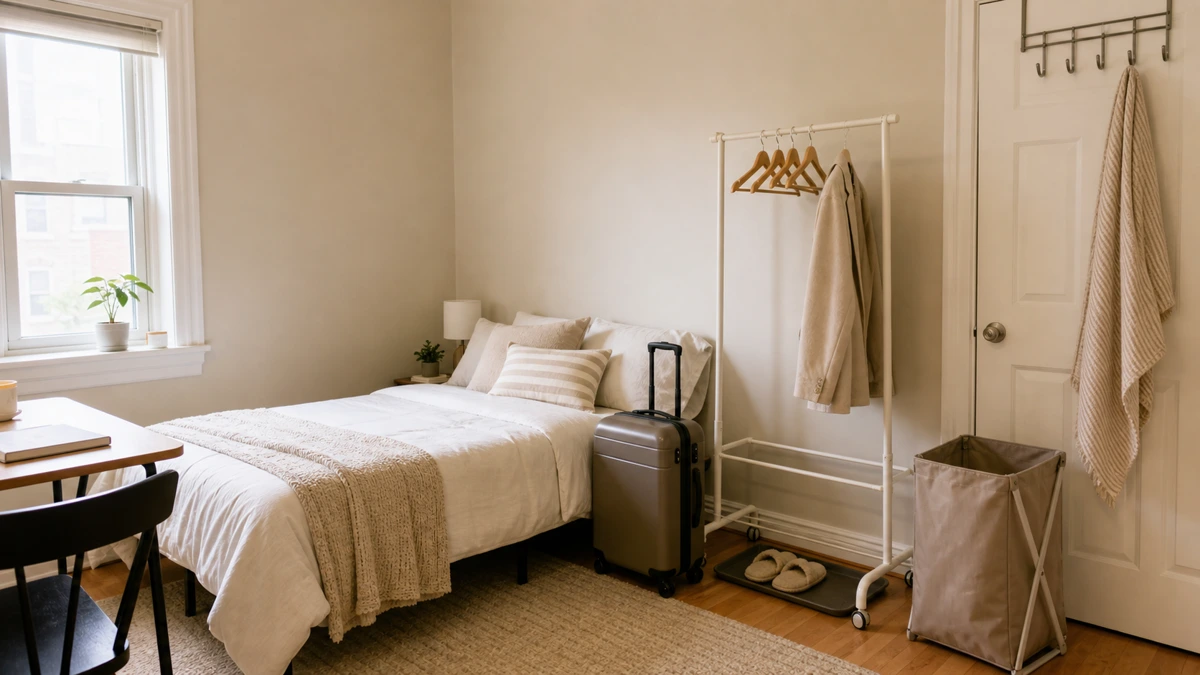
Your guest does not need a built-in closet for a short stay. They need one obvious place to hang the clothes that wrinkle, one place to park a bag, and one place for shoes or used towels so the room does not turn into open-luggage chaos by the second night.
That is the whole job. For a guest bedroom with no closet, the fastest fix is usually a small rolling garment rack or an over-door hook rail, plus a low spot for luggage and a tiny laundry zone. You can set it up without drilling, but you still need to measure first because doors, bed frames, and cheap racks are where these quick fixes usually fail.
Quick answer
The short version
For a guest bedroom with no closet, build a temporary landing zone instead of trying to fake a full wardrobe. Start with hanging space, add a luggage or folded-clothes spot, then give shoes and laundry their own small container.
- Best first fix: Use a rolling garment rack if you have floor space, or an over-door hook rail if the room is tight.
- Measure first: Check door thickness, top-door clearance, floor width, rack height, and under-bed space before buying.
- Skip first: Oversized portable wardrobes, weak adhesive hooks for heavy coats, and deep bins guests cannot easily use.
Start by making three guest zones
A closetless guest room only feels awkward when belongings have nowhere obvious to land. The bed becomes the dresser. The chair becomes the closet. Shoes end up in the doorway.
Before buying anything, choose three landing spots:
- Hanging: A small rack, over-door rail, or fold-down rail for coats, dresses, blazers, and shirts that wrinkle.
- Bags and folded clothes: A bench, luggage stand, clear floor corner, or under-bed bag for the suitcase.
- Shoes and laundry: A slim shoe rack, wipeable tray, or foldable hamper so the floor stays usable.
What to buy first if you only have time for one thing
If someone is arriving tomorrow, buy the item that gets clothes off the bed and floor. In most rooms, that means either a rolling garment rack or an over-door hook rail.
Choose based on the room, not on which product looks more organized in photos. A garment rack is better for longer stays and winter clothing. An over-door rail is better when the room is narrow, already has a desk, or doubles as a home office.
| Decision factor | Choose a rolling garment rack | Choose an over-door hook rail |
|---|---|---|
| Floor space | You have an open wall or corner at least about 3 feet wide. | The floor is already tight and every corner has furniture. |
| Guest clothing | They may bring coats, dresses, suits, or several shirts. | They are packing light and mostly need a coat or tomorrow’s outfit. |
| Setup time | You can spend 15 to 20 minutes assembling and adjusting it. | You need the fix to happen in one minute. |
| After the visit | You can roll it to laundry, storage, or another room. | You want something that can stay on the door or slip into a drawer. |
A 20-minute no-drill guest room setup
This is not a makeover. It is a quick reset so the room tells your guest, without a tour, where their things go.
Clear one wall, corner, or door
Move the decorative-but-useless piece first: the extra chair, the big plant, the basket of spare blankets. A temporary closet needs a clean landing spot more than it needs a matching storage set.
Add hanging space
If you have room for a rolling garment rack, check width, height, stated weight limit, wheel locks, and whether it folds down later. A rack with a lower shelf can hold shoes or a small bag, but only if it leaves a clear path around the bed.
If you use over-door hooks, measure the door thickness and top gap before buying. The door still needs to close without scraping, and padding matters on painted rental doors.
A fold-down wall rack or no-drill hanging rail can work, but treat adhesive and tension systems cautiously. They depend on surface texture, wall material, installation pressure, and weight. Heavy coats are where cheap hooks usually disappoint.
Give the suitcase a place to live
Use a low bench, luggage stand, clear floor corner, or under-bed storage for items your guest does not need every hour. For an under-bed storage bag or flat bin, measure the bed clearance and look for handles, smooth zippers, and breathable fabric.
Add shoes, laundry, and visual calm
A slim shoe rack or entry tray near the door is enough. Add a foldable hamper or sturdy tote for used towels. If the open rack looks busy, use matching hangers and one or two breathable garment covers or dust bags for coats, dresses, or suits.
Before you buy
Check this first
- Door fit: Measure door thickness and top clearance before buying over-door hooks.
- Walkway space: Open the door fully and leave a clear path around the bed before placing a rack or hamper.
- Rental rules: Check lease rules, painted surfaces, wall material, and weight limits before using adhesive or tension-mounted pieces.
- Guest comfort: Avoid storage that requires bending low if the guest is older, recovering, pregnant, or staying for more than a night.
Rolling rack vs. hooks vs. under-bed storage
These pieces solve different parts of the problem. A rolling rack is the closest thing to a temporary closet. Hooks are a fast hanging fix. Under-bed storage is better for bags, folded clothes, and extra linens than for daily outfit access.
| Storage type | Best for | Why it helps | Watch out for |
|---|---|---|---|
| Rolling garment rack | Weekend stays, winter coats, dresses, suits, and guests who unpack a little. | Creates visible hanging space and may add a lower shelf for shoes. | Wide racks can block walkways. Weak joints may lean under heavy clothing. |
| Over-door hook rail | Very small rooms, one-night guests, and fast no-tool setup. | Uses dead space behind the door and stores easily later. | Some rails stop the door from closing or scratch paint without padding. |
| Fold-down or no-drill rail | A narrow wall where floor space is too valuable for a rack. | Adds temporary hanging space without a permanent closet build. | Adhesive and tension systems are surface-dependent and should not be overloaded. |
| Under-bed bag or flat bin | Extra blankets, folded clothes, bags, or off-day items. | Uses hidden space and keeps the floor cleaner. | Guests may forget items stored out of sight. Low beds may not have enough clearance. |
| Slim shoe rack or tray | Shoes, slippers, boots, and wet soles near the door. | Keeps dirt and tripping hazards contained. | Deep racks can eat into the walkway. Fabric baskets are harder to clean. |
Start small, then upgrade only if guests stay longer
For one night, an over-door hook, a clean bag surface, and a shoe tray may be enough. For a weekend, add a rolling rack with a few empty hangers and a foldable hamper. For a week or more, add under-bed storage, garment covers, and a better luggage surface.
The best temporary setup is the one you will actually put away later. A huge portable wardrobe may solve one weekend and annoy you for the next six months.
What not to buy first for a temporary guest room
Some storage products look useful online but make a small room harder to use.
- Oversized portable wardrobes: They take time to assemble, dominate the room, and are awkward to store after visitors leave.
- Weak adhesive hooks for heavy coats: Use them only within conservative weight limits and only on suitable surfaces. Heavy coats, bags, and damp towels are not the place to gamble.
- Deep opaque bins: Guests should not have to dig through a storage cave for socks. Use shallow, easy-access storage instead.
- Decorative baskets that snag clothes: Pretty baskets are fine for throws. They are less useful for luggage, shoes, or folded clothing.
- Anything behind the door swing: If the bedroom door cannot open fully, the room immediately feels smaller.
Simple setups for different guest situations
- One-night guest: Use an over-door hook for a jacket and clear a chair, bench, or luggage stand for the bag.
- Weekend guest: Add a rolling rack, five to ten empty hangers, a shoe tray, and a foldable hamper.
- Parent or older guest: Avoid daily under-bed storage. Keep luggage at waist height and hanging space within easy reach.
- Couple sharing the room: Give each person a separate bag zone. If there is room, combine a rack with an over-door rail.
- Winter guest: Choose a sturdier rack, leave room for long coats, and use a wipeable boot tray.
- Guest room/home office: Keep storage on one side of the room and use garment covers so guest clothes do not take over the work view.
Frequently Asked Questions
What can I use if my guest room has no closet?
Use a rolling garment rack, an over-door hook rail, or a fold-down hanging rail for clothes. Then add a luggage spot, a small shoe tray, and a foldable hamper so the room has a complete temporary setup.
Is a clothing rack enough for a guest room?
Yes, for most short stays. A clothing rack is enough for coats, dresses, shirts, and anything that wrinkles. Guests can keep folded clothes in a suitcase, under-bed bag, or flat bin.
Are over-door hooks safe for rental doors?
They can be a good rental-friendly option if the door has enough top clearance, the hook rail is padded, and the weight stays reasonable. Check that the door closes properly and does not scrape the frame.
How do I make open storage look less messy?
Use matching hangers, limit the number of visible items, and add breathable garment covers for coats, dresses, or suits. Keep shoes in a tray and put extra items in shallow bins rather than leaving everything loose.
What should I avoid in a tiny guest room?
Avoid bulky wardrobes, deep bins, oversized hampers, and racks that block the door swing or the path around the bed. In a tiny room, access matters more than storage capacity.
Final take
A closetless guest room does not need a fake built-in closet. It needs a clear little system. Put hanging clothes in one place, bags in one place, and shoes or laundry in one place. If a guest can understand the room in the first thirty seconds, the setup is doing its job.
Start with a tape measure. Check the door, the floor space, and the bed clearance. Those three measurements will tell you whether to buy a rack, hooks, under-bed storage, or almost nothing at all.