Disclosure: This post may contain affiliate links. If you buy through these links, we may earn a commission at no extra cost to you.
If you need to clean a rug in a small apartment without a yard or hose, water control matters more than scrubbing power. This guide shows how to handle crumbs, smells, small spills, and drying space without soaking the rug or turning the room into a wet mess.
Related practical guides: checking your couch before buying an upholstery cleaner, musty washing machine smells, plant pot water stains on wood floors.
If you had a driveway and a garden hose, the fix would be simple. Drag the rug outside, rinse it, scrub the bad spots, and let the sun do the hard part.
But you live in an apartment. You have a normal bathtub, maybe a tiny balcony, and nowhere sensible to lay a wet rug. A full-size carpet cleaner sounds helpful until you picture storing it in the same closet that already holds the vacuum, mop, winter coats, and the thing you keep meaning to donate.
The real problem is not just getting the rug clean. It is getting it dry before it damages the floor, warps the backing, or makes the room smell worse than it did before.
Quick answer
The short version
If a rug is too large to dry quickly in your apartment, do not wet-wash the whole thing indoors. Treat small spots with controlled moisture, pull water out immediately, and lift the damp area so air can reach both sides.
- Best first fix: Vacuum well, mist the stained area lightly, work only the top fibers, then press with dry white towels.
- Check first: Read the care label, test for dye transfer, and inspect the backing before adding water.
- Skip first: Large rug bathtub washes, full-size upright carpet cleaners, and wet DIY cleaning on wool, jute, silk, antique, or unstable rugs.
Start by deciding whether this rug should get wet
A rug is not just the visible top layer. It may have woven fibers, adhesive, latex backing, binding, dye, and a rug pad underneath. In a house, you can sometimes recover from over-wetting because you have sun, outdoor air, and room to work. In a small apartment, a soaked rug often sits flat against the floor for too long.
Start with the tag. Synthetic rugs such as polypropylene, nylon, polyester, and some cotton flatweaves are usually more forgiving for light spot cleaning. Wool, jute, sisal, silk, viscose, vintage, antique, hand-knotted, and heavily dyed rugs deserve much more caution. For those, stick to dry vacuuming, very light surface blotting when appropriate, or professional cleaning.
Then do the white-cloth test. Dampen a white microfiber towel with plain water and press it into a hidden colorful corner for ten seconds. If color transfers to the towel, stop. Water may leave a faded ring or pull dyes into nearby sections.
Finally, check the backing. If it feels crunchy, looks cracked, flakes onto the floor, or has a rubbery layer that is already breaking down, water can turn a small cleaning job into a shedding mess.
Spot clean like water is expensive
The most common apartment rug mistake is pouring water on a stain because it feels more decisive. It is also how you send moisture through the rug, into the pad, and against the floor.
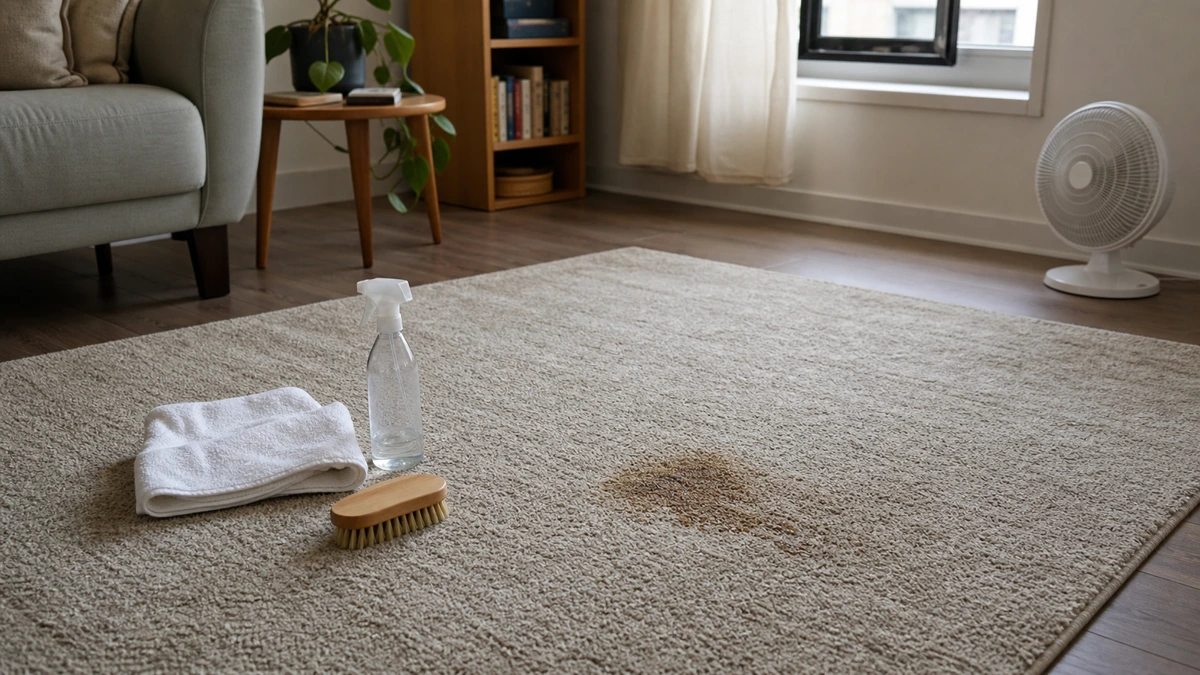
Use a spray bottle instead. A fine mist sprayer lets you dampen only the fibers you need to clean. For many small food or drink marks, plain water is the safest first pass. If you need soap, use a tiny amount of mild, clear dish soap mixed into water. More soap is not more cleaning; it is more residue to remove later.
Vacuum the area first so loose dust does not turn into mud. Mist lightly. Use a soft-bristle cleaning brush or a small non-scratch stain sponge to tap and loosen the top fibers, working from the outside of the stain toward the center.
Then switch from cleaning to extraction. Lay a dry white microfiber towel over the damp spot and press hard. Standing on the towel for a few seconds works better than rubbing with your hand. Replace the towel and repeat until the spot feels barely damp.
If the rug is on hardwood, laminate, or vinyl, lift the cleaned section off the floor while it dries. A plastic bin, overturned bowl, or laundry basket can create a small tent so air reaches the underside.
When a bathtub wash actually makes sense
A bathtub wash is only for small, flexible, washable rugs: a synthetic hallway runner, a cotton flatweave, or a small entry mat with a backing that can handle water. It is not for an 8×10 living room rug, even if you can physically fold it into the tub.
Wet rugs get heavy fast. They are hard to rinse, hard to lift, and easy to leave too damp.
If the rug is truly small enough, vacuum both sides first. Fill the tub with a few inches of lukewarm water and a small amount of mild detergent. Press the water through the rug gently rather than twisting it. Drain, rinse with clean water, and keep rinsing until the water no longer feels slippery.
The important part is removing water before you move the rug. Leave it flat in the empty tub and use a small squeegee or water scraper to push water toward the drain. This is only for washable, flexible rugs. Do not scrape a stiff glued backing or anything that creases when bent.
Move the rug only when it is damp, not dripping.
Drying is the whole job
Drying is where most apartment rug cleaning fails. A rug can look fine on top while the underside is still damp. That hidden dampness is what creates sour smells and floor problems.
Never put a wet rug flat on the floor and hope for the best. Hang small rugs over a sturdy foldable drying rack, balcony rail if your building allows it, or a secure over-door drying setup. Avoid weak tension shower rods; a soaked runner can be heavier than it looks.
Use airflow. Point a fan at the rug, leave interior doors open, and run the bathroom exhaust fan if you used the tub. If the weather is dry, open a window. Check the bound edges and thick corners with your hand before putting the rug back.
If a spot is still damp after several hours, press it again with dry towels and lift it higher. The goal is not a nice-looking damp rug. The goal is a completely dry backing.
Reset the rug after it dries
Cleaning can change how a rug sits. Thin rugs may ripple. Corners may curl. A runner that used to stay put may start sliding every time someone walks past.
Do not iron the rug or tape it down with random adhesive. First, gently roll curled corners in the opposite direction for a short period. If that is not enough, a rug gripper or thin rug pad can help the corners sit flatter and reduce slipping. Check that any gripper you use is suitable for your floor type and will not leave residue.
This is also the moment to decide whether the rug is worth more effort. If the stain is still obvious, the smell returns, or the backing feels damaged, more DIY water is usually not the answer.
Before you buy
Check this first
- Material: Synthetic and small cotton rugs are more DIY-friendly than wool, jute, silk, antique, or unstable dyed rugs.
- Drying route: Know where the rug will hang, how air will move, and how you will keep it off the floor before you add water.
- Storage reality: In a small apartment, towels, a spray bottle, a soft brush, and a foldable drying rack often make more sense than a bulky machine.
| Rug situation | Try first | Avoid |
|---|---|---|
| Small coffee or food stain | Mist lightly, loosen with a soft brush, press dry with white towels. | Pouring water directly onto the stain. |
| Overall stale smell | Vacuum slowly, use dry odor control such as baking soda on suitable rugs, then vacuum again. | Soaking the whole rug indoors just to freshen it. |
| Small synthetic runner | Bathtub wash only if the backing is washable, then squeegee and rack dry. | Hanging it dripping wet over a weak shower rod. |
| Wool, jute, silk, antique, or dyed rug | Dry vacuuming, careful surface blotting if appropriate, or professional cleaning. | DIY wet washing or aggressive scrubbing. |
| Pet urine saturation, mildew smell, sewage contamination, or unknown damage | Professional cleaning or replacement. | Perfume sprays, repeated soaking, or trying to hide the smell. |
Start small, upgrade later
You do not need a cart full of cleaning supplies for one apartment rug. Start with the small items that solve the biggest apartment problems: a spray bottle for water control, white microfiber towels for extraction, and a soft-bristle brush for gentle spot work.
If you clean small spills often, add a stain blotting sponge or non-scratch scrub pad. If you wash small rugs occasionally, a foldable drying rack earns its space because it helps with laundry too.
Only consider a compact extraction machine if spills are frequent and the rug material can handle wet cleaning. A full-size upright carpet cleaner is usually the wrong first purchase for apartment living. It takes up too much room and can leave more moisture behind than your space can dry safely.
What not to buy first
Do not buy a full-size carpet cleaner because one rug looks dingy. The machine may be useful in a house with storage and airflow, but in an apartment it can become an expensive way to make a rug too wet.
Do not buy strong stain chemicals before you know the rug material. A harsh cleaner on an unstable dye or natural fiber can leave a lighter, stranger patch than the original stain.
Do not use a stiff scrub brush. It can untwist fibers and leave a fuzzy damaged area that never blends back in.
And do not use too much soap. Soap residue left in fibers attracts new dirt, which is why a spot can look clean for a week and then turn darker than before.
Frequently Asked Questions
Can I wash a large area rug in my bathtub?
Usually, no. Even if you can fold a large rug into the tub, you may not be able to rinse the center properly or remove enough water for safe indoor drying. Spot cleaning or professional cleaning is usually more realistic.
How do I remove rug smell without washing the whole rug?
Vacuum slowly first. For suitable dry rugs, baking soda can help absorb stale odors if you let it sit and vacuum it thoroughly. If the smell is from urine, mildew, sewage, or a wet backing, dry deodorizing will not solve the real problem.
Can I use a steam mop on a rug?
Be careful. Steam adds heat and moisture without extracting dirty water. It can affect glued backings, sensitive fibers, and some synthetic rugs. It is not a substitute for cleaning and drying properly.
What if the spot will not dry?
Press it with fresh dry towels, lift the damp section off the floor, and point a fan directly at it. If the rug stays damp or smells sour, stop adding moisture and consider professional help or replacement.
Is it worth cleaning a cheap rug professionally?
It depends on the rug and the problem. For an inexpensive synthetic rug with a major odor or backing damage, replacement may be more practical than paying for professional cleaning. For a valuable or sentimental rug, do not gamble with apartment DIY cleaning.
Final take
A small apartment changes the rules. The winning move is not the deepest wash; it is the least water that solves the visible problem, followed by the fastest drying setup you can manage.
If you cannot dry the rug properly, do not soak it. Clean the spot, control the moisture, keep air moving, and be honest when a rug has reached the point where a professional cleaner or replacement is the calmer choice.