Disclosure: This article may contain affiliate links. If you buy through these links, Useful Nook may earn a small commission at no extra cost to you.
If your room feels messy every morning and you only have 10 minutes, the goal is not a full deep clean. A small reset station gives mugs, mail, chargers, clothes, and everyday clutter one obvious place to land so you can reset the room quickly before the day gets away from you.
Related practical guides: move-out cleaning checklist, first apartment cleaning starter kit, sticky kitchen cabinet reset.
You cleaned, but the house did not stay reset.
In a small apartment, studio, dorm, or shared rental, that little bit of clutter feels louder than it should. The real problem is often not effort. It is that the tools disappear between uses: the spray is in the bathroom, the good cloth is under the sink, the brush is in a random drawer, and the damp towel is hanging over the faucet because there was nowhere else to put it.
A cleaning app may help for two days, then become one more notification to ignore. A huge weekly checklist can make a normal weeknight feel like a final inspection.
For this kind of mess, start smaller. Build one tiny reset station that makes the next wipe-down easier to begin and easier to finish.
Quick answer
The short version
If your home feels messy again every morning, do not start with a giant cleaning schedule. Make one visible reset station with the few tools you actually use at night.
- Best first fix: a small grab-and-go cleaning caddy parked where the mess usually starts.
- Make it visible: add a short dry-erase checklist and a simple timer so the routine does not live only in your head.
- Do not skip the exit step: give used cloths a dirty drop zone so the reset does not end with a damp rag in the sink.
Why a Reset Station Works Better Than a Big Checklist
A daily reset fails when starting it feels like a scavenger hunt. You need the cloth from one cabinet, the spray from another room, and a place to put the used towel when you are done. Each tiny decision gives you a chance to stop.
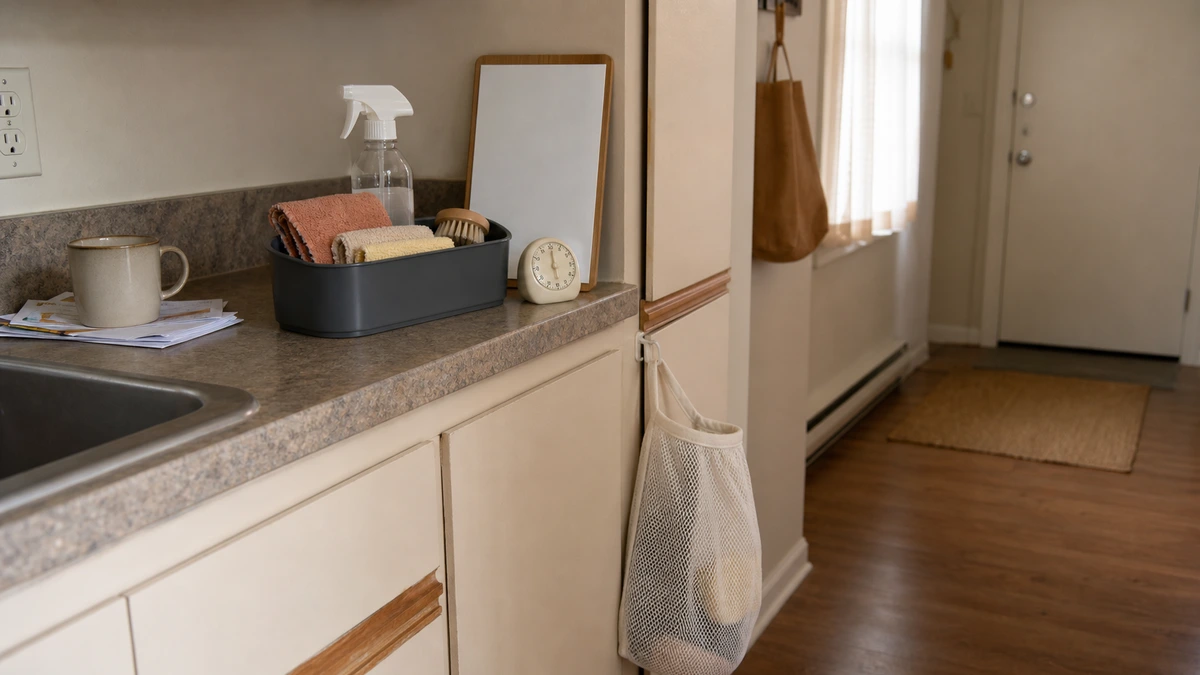
A reset station removes those decisions. The loop should be boring in the best way: grab the caddy, check the board, start the timer, wipe the visible surfaces, drop the cloth, put the caddy back.
The goal is not a magazine-level clean. It is making tomorrow morning less annoying than this morning.
Start With a Small Cleaning Caddy
Keep a dedicated caddy for the tools you use during a normal evening reset. Not every cleaner you own. Not the deep-cleaning supplies. Just the few items that help you bring counters, tables, and sinks back to baseline.
A good reset caddy usually has room for a gentle all-purpose spray, a small brush, a few dry cloths, and maybe label tape or a pen for the checklist. Before buying one, measure the awkward place where it will actually live. Under-sink plumbing hangs lower than it looks, and a caddy that only fits after you reorganize the whole cabinet is probably too big.
Look for a comfortable handle, a footprint you can lift with one hand, and compartments that keep bottles from tipping. Drainage holes are useful if the caddy may hold damp tools, but the better habit is to keep dirty cloths out of the clean caddy altogether.
Put the Checklist Where the Mess Happens
Digital task apps hide the routine behind a lock screen. That is not always helpful when the point is to move quickly and avoid distraction.
For a tiny reset, a physical prompt often works better. Put a small magnetic or adhesive dry-erase board on the fridge, inside a cabinet door, or near the caddy. Keep the list short enough that it looks doable on a tired night.
Five lines are plenty:
- Clear counter clutter.
- Wipe the main surface.
- Load or start the dishwasher.
- Empty visible trash.
- Start the timer and stop when it rings.
Check the surface before you buy a board. Some stainless-look fridges are not magnetic, and adhesive boards can be risky on older painted cabinets or paper-thin veneer. If you rent, choose the least risky mounting spot first, even if it is not the prettiest one.
Removable labels can help in a shared home. Mark the counter spray, cloth colors, or caddy zones so nobody has to guess where things go.
Stop Letting One Cloth Do Every Job
One gray cloth for the kitchen, bathroom, table, and dusting shelf creates confusion. Even if the cloth is technically clean, nobody wants to wonder where it was used last.
A small set of color-coded microfiber cloths solves that without adding much clutter. Assign one color to the kitchen, one to the bathroom, and one to dusting or general surfaces. The point is not to create a fussy system. It is to remove the pause where you think, “Wait, which rag was this?”
When choosing cloths, check that they are washable and not so large that they are annoying to wring out in a small sink. A standard small square is usually easier for daily wipe-downs than an oversized towel.
Give Dirty Cloths a Real Exit
This is the step many routines miss. The counter is clean, but the used cloth ends up in the sink, over the faucet, or back in the caddy with the clean supplies. That makes the next reset feel worse before it even starts.
Create a dirty-cloth drop zone right where the reset ends. A small laundry mesh bag hanging inside the lower cabinet works well in many kitchens. Use a no-drill hook if you rent, but read the removal instructions and test carefully on a hidden spot if the finish seems fragile.
Wet cloths get heavier than expected, so check the hook’s stated load and the mesh bag’s hanging loop. The bag should be easy to drop a cloth into without fighting a tiny zipper every night. When it is full, wash the bag and cloths together.
Use a Timer So Cleaning Does Not Expand
A small wipe-down can turn into a full cleaning project if there is no stop rule. You wipe the counter, notice a sticky cabinet handle, open a drawer, and suddenly it is midnight.
Use a simple visual timer or kitchen timer to cap the effort. Ten or fifteen minutes is enough for a daily reset. When the timer rings, stop. Leave the deep-cleaning task for another day.
Look for a readable dial, a stable stand or magnet, and an alarm volume that will not jolt everyone in a small apartment. The timer is not there to force perfection. It is there to make the routine feel safe to start because it has an end.
Before you buy
Map the station before adding tools
- Measure the parking spot: check cabinet height, plumbing, trash-can clearance, and whether the caddy can be grabbed with one hand.
- Check renter surfaces: adhesive hooks and boards can fail or peel paint on older cabinets, textured laminate, or weak veneer.
- Keep the list short: if the board starts looking like a whole-house cleaning plan, it will stop being useful for a nightly reset.
- Separate clean from dirty: do not put damp used cloths back into the clean caddy.
Symptom-to-Fix Map
| Morning problem | What is probably failing | First physical fix | Product group |
|---|---|---|---|
| Tools are scattered across rooms | The reset takes too many trips | Park daily tools in one small caddy | Small cleaning caddy |
| You forget what to do | The routine lives in an app or in your head | Put three to five tasks on a visible board | Magnetic or adhesive dry-erase checklist |
| Kitchen and bathroom cloths get mixed | Every cloth looks the same | Assign colors by room or use | Color-coded microfiber cloth set |
| Used cloths sit in the sink | There is no exit step | Hang a small drop bag near the station | Mesh laundry bag and no-drill hook |
| A quick tidy becomes an hour | There is no stopping point | Set a visible timer and stop when it rings | Visual timer or kitchen timer |
Start Small, Upgrade Later
Do not buy the whole system at once.
Start with what creates the most friction right now. If wet cloths keep ending up in the sink, create the dirty-cloth drop zone first. If cleaning always turns into a huge project, start with the timer. If tools keep disappearing, start with the caddy.
Upgrade only after the reset is happening a few nights a week. Add color-coded cloths when the cloth confusion is real. Add labels when other people share the space. Add a better caddy only if your current container is too large, too flimsy, or too annoying to grab.
The best reset station is not the prettiest one. It is the one you will still use when you are tired.
What Not to Buy First
Skip the rolling cleaning cart. In a small apartment, it often becomes another piece of furniture to dodge.
Skip the giant printable binder. A thick checklist may feel productive, but it is usually the wrong tool for a five-minute counter reset.
Skip bulk chemical jugs for this station. A daily reset station is for light maintenance, not serious stain removal or heavy-duty cleaning projects. Keep stronger products stored safely and separately.
Skip decorative bins until the routine works. A nice-looking container does not help if it hides the tools or makes the caddy harder to grab.
Frequently Asked Questions
What if I do not have space under the sink?
Use the closest realistic parking spot: a narrow caddy beside the fridge, a small tote on a shelf, or a basket in a hall closet. The station does not have to be under the sink. It has to be easy to reach where the mess usually starts.
How many tasks should be on the reset checklist?
Keep it to three to five tasks. If the list includes dusting ceiling fans, cleaning baseboards, and reorganizing cabinets, it is no longer a daily reset. The checklist should cover the surfaces and small actions that make tomorrow morning feel less chaotic.
Are adhesive hooks safe for rental cabinets?
It depends on the finish. Smooth modern cabinet doors often handle removable strips better than old painted wood, textured laminate, or cheap veneer. If you are unsure, use an over-the-door hook or a freestanding container instead of risking a visible cabinet surface.
How should I wash microfiber cloths?
Wash them regularly with normal detergent and skip fabric softener, which can coat the fibers. Let damp cloths dry in the mesh bag until wash day, but do not leave wet cloths sitting for weeks.
Should I use different cleaners for different rooms?
For a daily reset, keep it simple. A gentle all-purpose spray, dish soap, and the right cloth usually cover light wipe-downs. Save specialty cleaners for specific projects, and follow the product label and surface instructions.
Quiet Final Takeaway
A useful reset station does not promise a perfect home. It just makes the next small cleanup easier than avoiding it.
Put the tools in one place. Keep the checklist visible. Give dirty cloths somewhere to go. Set a timer that lets you stop. In a small home, that modest physical system can matter more than another app, another printable, or another product haul.