Disclosure: This article may contain affiliate links. If you buy through these links, Useful Nook may earn a small commission at no extra cost to you.
If your kitchen cabinets still feel sticky after cleaning, the problem is usually old cooking grease mixed with dust, not ordinary surface dirt. This guide shows how to clean sticky grease from kitchen cabinets without damaging the finish, especially around the stove, handles, and painted or sealed doors.
Related practical guides: new apartment kitchen smell checks, small kitchen storage racks, first apartment cleaning starter kit.
That is kitchen grease buildup. Cooking oil drifts into the air, settles on cabinet doors, and slowly catches dust, lint, and pollen. In warmer months, when windows stay open and kitchens get humid, the tacky layer can show up faster.
The mistake is treating cabinet grease like oven grime. Cabinet doors are often painted, laminated, veneered, or built over MDF. Harsh sprays, soaking, and aggressive scrubbing can damage the finish before they remove the grease. The better approach is slower: soften the grease, lift it gently, rinse away residue, and dry the surface right away.
Quick answer
The short version
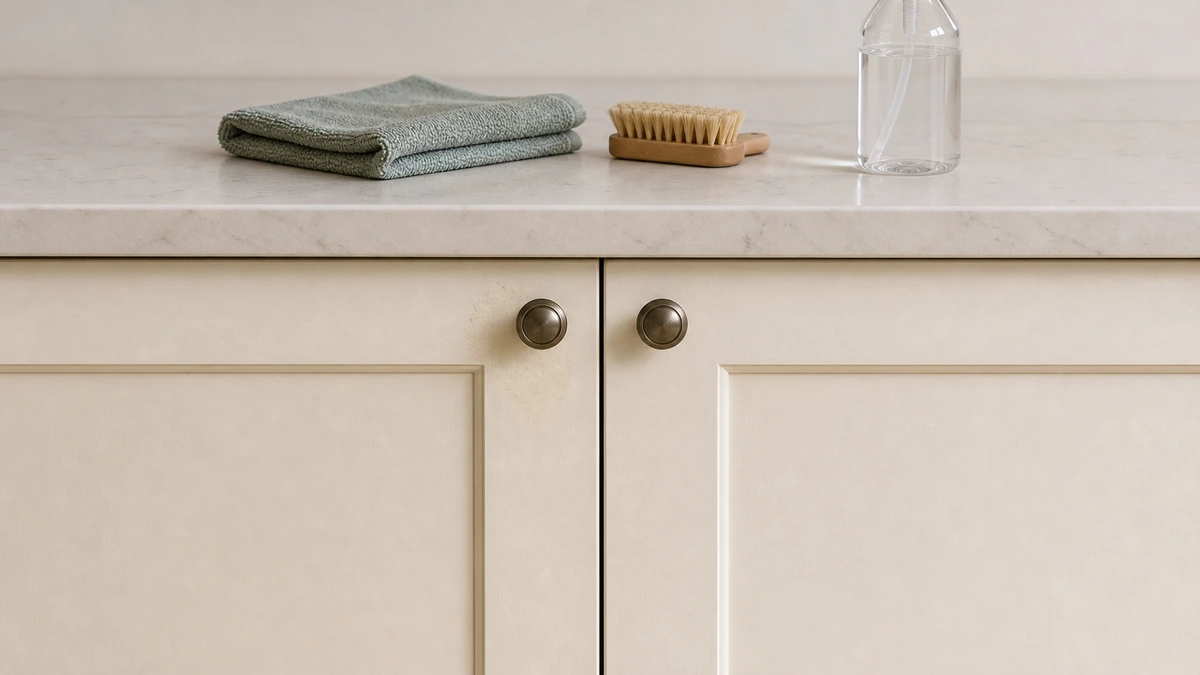
Start with warm water and a few drops of liquid dish soap on a barely damp microfiber cloth. Wipe gently, follow with a second cloth lightly dampened with plain water, then dry immediately with a clean towel.
- Best first fix: dish soap, warm water, and microfiber cloths.
- Test first: try the method on a hidden inside edge before cleaning the visible door.
- Skip first: abrasive pads, magic-eraser-style foam, undiluted vinegar, bleach, ammonia, steam, and heavy-duty degreasers.
Why Kitchen Cabinets Get Sticky
When you fry, sauté, roast, or simmer near the stove, tiny droplets of oil move into the air. Heat carries them upward, and they land on cabinet doors, drawer fronts, handles, and the flat tops of upper cabinets.
Fresh oil wipes away easily. Left alone, it hardens into a tacky, resin-like layer. Dust and lint stick to it, which is why a dry paper towel drags and a wet paper towel mostly smears the film around. Plain water is not enough. A mild surfactant, such as dish soap, helps loosen the oil without forcing you to use a stronger cleaner first.
What Not to Use First
Assume the finish is more delicate than it looks. Many cabinet doors have a thin painted surface, a clear coat, or a laminate edge wrapped around particleboard or MDF.
Avoid melamine foam sponges on visible cabinet faces. They can remove grease, but they work like micro-abrasives and may dull paint or leave cloudy patches. Skip stiff scrub brushes, scouring pads, abrasive powders, and heavy pressure for the same reason.
Be careful with vinegar. It is useful in some parts of the home, but it is acidic and is not a universal cabinet cleaner. On certain painted, stained, veneer, or older clear-coated surfaces, repeated acidic cleaning can dull or soften the finish.
Also avoid bleach, ammonia, solvent-heavy degreasers, steam cleaners, and any chemical-mixing experiments. They are unnecessary for normal cabinet grease and can create surface or safety problems.
A Gentle Step-by-Step Cleaning Method
First, test a hidden spot. Wipe the inside edge of a lower cabinet door with your diluted dish-soap solution, then dry it. If the finish feels soft, looks dull, bubbles, swells, peels, or transfers color onto the cloth, stop.
Next, mix warm water with only two or three drops of liquid dish soap. You want enough soap to cut grease, not a bowl of suds that needs heavy rinsing.
Dampen the cloth, not the cabinet. Dip or lightly mist a microfiber cloth, then wring it until it is barely damp. Do not spray the cabinet directly. Liquid can run into hinges, seams, and laminate edges, where MDF or particleboard can swell and bubble.
Work in small sections with light pressure. If a spot is stubborn, hold the warm damp cloth against it for about thirty seconds, then wipe again. Give the soap time to loosen the grease before you reach for more force.
Finish with a plain-water wipe and a dry cloth. Soap residue can attract new dust, and standing moisture is hard on cabinet edges, so do not let the doors air-dry.
Handles, Grooves, and Hidden Top Edges
Handles collect hand oils and cooking residue at the same time. A soft detail brush, lightly dampened with soapy water, can clean behind pulls and around screw plates without grinding a sponge into the cabinet face. If hardware is easy to remove, wash it separately, dry it completely, and reinstall it only when it is no longer damp.
Shaker-style doors and recessed panels often hold dark, sticky dust in the inner corners. Use a narrow crevice brush or the folded corner of a microfiber cloth. Avoid hard plastic scraping, especially on painted trim where the finish is thin.
If your upper cabinets do not reach the ceiling, the top surface may be the greasiest part of the kitchen. Use a stable step stool so you can see the surface, and wear disposable nitrile gloves if the layer is unpleasant. After cleaning and drying, lay down non-adhesive cabinet shelf liner cut to size. Next time, the grease lands on a removable surface instead of the cabinet finish.
Before you buy
Check this before adding another cleaner
- Finish condition: if paint or varnish feels gummy, chipped, swollen, or soft, stop scrubbing.
- Tool texture: choose soft cloths and brushes before pads with any abrasive feel.
- Moisture control: avoid any method that soaks seams, hinges, or laminate edges.
- Actual problem: if the cabinet still feels tacky after rinsing and drying, the finish itself may be breaking down.
Low-Cost Tools That Actually Help
You do not need a cabinet-cleaning kit. A few simple tools help because they control moisture and friction better than paper towels or random scrub pads.
| Tool | Best for | Use carefully when | Skip if |
|---|---|---|---|
| Microfiber cloth | Wiping, rinsing, and drying cabinet faces | The wood is rough, splintered, or unfinished | The cloth has fabric-softener buildup or trapped grit |
| Soft detail brush | Handles, hinges, grooves, and trim | Paint is flaking or the bristles feel stiff | You are cleaning a large flat panel |
| Non-scratch sponge | Thicker grease on hidden upper cabinet tops | The finish is glossy, worn, or delicate | It has a coarse scouring side |
| Empty spray bottle | Mixing diluted soap and misting the cloth | You are near seams, hinges, or under-cabinet lighting | You are tempted to spray the cabinet directly |
| Cabinet shelf liner | Protecting unseen upper cabinet tops | The top surface is visible from a stairway or loft | Your cabinets already reach the ceiling |
| Crevice brush | Sticky dust in Shaker-door corners | The brush has hard plastic edges | A folded microfiber cloth reaches safely |
For a basic apartment-friendly kitchen setup, start with microfiber cloths, a small spray bottle, dish soap, and one soft detail brush. Add cabinet liner only if you have open space above upper cabinets. Add a crevice brush only if your doors have grooves that a cloth cannot reach.
What to Buy First and What to Skip
Buy first: a washable pack of microfiber cloths. Cabinet cleaning works better when you can use one cloth for soapy wiping, one for plain-water rinsing, and one for drying. Trying to clean the whole kitchen with one dirty cloth just spreads the film around.
A small spray bottle helps if it keeps the cloth barely damp. A soft detail brush is useful around handles and grooves. For hidden upper cabinet tops, shelf liner is the rare cheap add-on that can save real effort later.
Skip heavily fragranced cabinet sprays if they mainly promise shine. Some leave a residue that looks nice for a day but catches dust faster later. Skip steam cleaners for cabinet doors, too. Steam melts grease, but it can push hot moisture into seams, veneer glue, and MDF edges.
Common Mistakes
The biggest mistake is using too much water. Cabinet cleaning should feel like controlled wiping, not washing a wall. If your cloth drips, it is too wet.
The second mistake is scrubbing harder when grease does not move right away. Sticky, aged grease often needs a little dwell time with warm soapy water. If you attack the area with pressure, the finish may lose before the grease does.
Another common mistake is forgetting to rinse. Dish soap helps lift oil, but dried soap residue creates a new sticky layer. A plain-water wipe and dry buff make the difference between clean and merely smeared.
Frequently Asked Questions
Can I use dish soap on greasy kitchen cabinets?
Yes, diluted dish soap is usually the safest first cleaner for food-grease buildup. Use only a few drops in warm water, apply it with a barely damp cloth, rinse with plain water, and dry immediately.
Is vinegar safe for kitchen cabinets?
Not as a universal cleaner. Vinegar is acidic, and some painted, stained, veneer, or older clear-coated cabinets can dull or soften with repeated acidic cleaning. Start with dish soap and warm water before considering vinegar, and always test in a hidden spot.
How often should I clean cabinet doors near the stove?
If you cook often, wipe the cabinet doors beside and above the stove every week or two with a damp microfiber cloth, then dry them. That small habit prevents oil from hardening into a sticky layer.
What should I do if the finish still feels sticky after cleaning?
First, wipe once more with a cloth dampened only with plain water, then dry thoroughly. If the surface still feels gummy, soft, or tacky everywhere, the finish itself may be degrading from age, heat, or previous harsh cleaning. Stop scrubbing and check landlord, manufacturer, or professional guidance.
What is the safest tool for cabinet handles and grooves?
A soft detail brush is usually the safest tool. It reaches behind handles and into narrow grooves without the concentrated pressure of a hard sponge edge. If the finish is flaking, use an even lighter touch or avoid brushing that area.
Quiet Final Takeaway
Sticky kitchen cabinets do not need a dramatic cleaning routine. They need a mild cleaner, soft tools, and a little restraint. Start with dish soap, microfiber, and controlled moisture. Dry everything right away. Save stronger methods for surfaces that can actually tolerate them.
Once the tacky film is gone, the maintenance is simple: keep one clean cloth nearby, wipe the doors near the stove before grease hardens, and protect hidden cabinet tops if they collect dust. The less often you have to scrub, the safer your cabinet finish will be.