Disclosure: This post may contain affiliate links. If you buy through our links, we may earn a small commission at no extra cost to you. We only point readers toward practical product categories and buying checks, not guaranteed fixes.
You just moved in. The boxes are mostly unpacked, the counters are wiped down, and the kitchen looks clean enough. But every time you walk past the sink or open a lower cabinet, you hit a wall of damp, sharp, mildew-like air.
The easy move is to order plug-ins, sprays, or expensive candles. Resist that urge. A scented product usually turns a damp kitchen smell into artificial vanilla plus damp basement. Before you spend money on fragrance, narrow down where the smell is actually coming from.
Quick answer
The short version
Before buying air fresheners, check the sink drain, trash zone, under-sink cabinet, fridge area, and cabinet shelves. Look for old residue, hidden moisture, or a slow drip. Clean the simple things first. Then buy a targeted tool only if it matches the problem you found.
- Best first fix: Check and clean the likely source before adding scent.
- Measure first: Drain diameter, cabinet depth, pipe placement, and shelf size all matter.
- Skip first: Plug-ins, odor bombs, and harsh cleaners before you know the source.
Why Air Fresheners Are the Wrong First Move
Heavy perfumes mask problems. A musty or mildew-like smell usually points to hidden moisture, poor airflow, or old food and grease residue.
If you spray a linen scent over a slow drip under the sink, you still have a slow drip damaging the cabinet floor. The room may smell better for ten minutes, but the odor will come back when the fragrance fades.
Strong scents can also make it harder to notice whether the smell is getting worse. In a rental, you want to catch damp cabinets or leaks early, not cover them with a plug-in warmer.
The 20-Minute New-Apartment Kitchen Smell Check
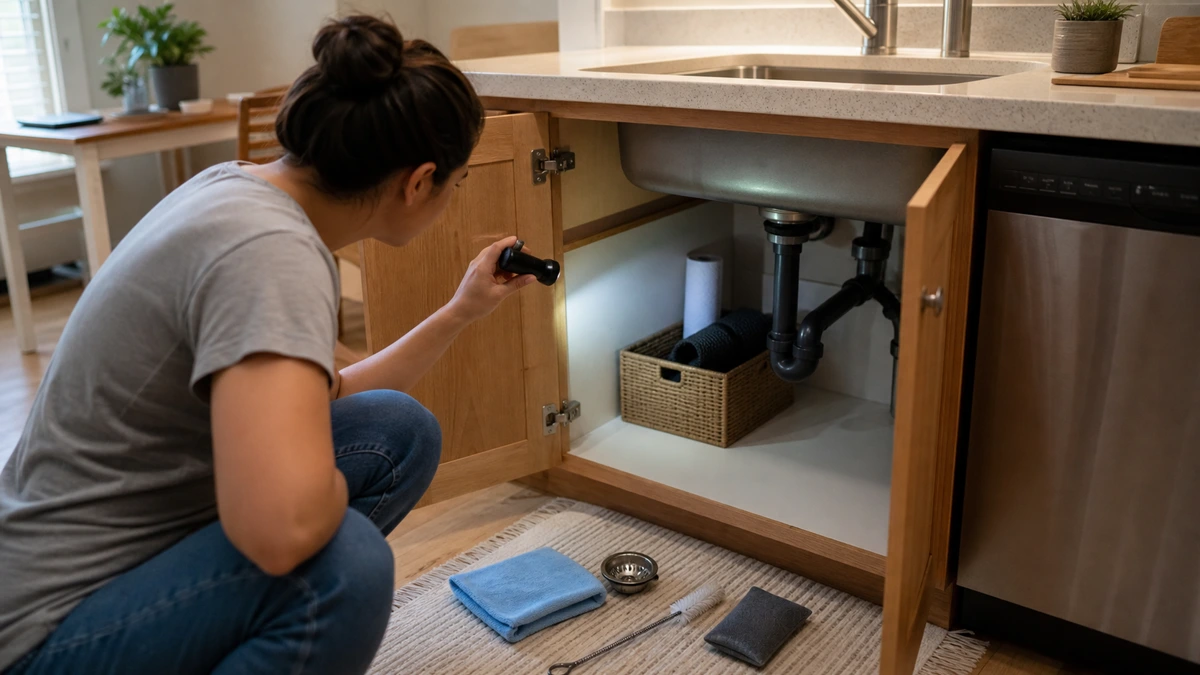
You do not need to tear the kitchen apart. Grab a flashlight, a damp microfiber cloth, and 20 minutes. Start with the places that can hide food, water, or old residue without looking messy from the outside.
Start at the sink drain and strainer area
Kitchen drains hold onto previous tenants' messes. Food particles, grease, and soap scum can cling to the drain area and create a sour smell that drifts upward.
Lean over and smell near the drain. If the odor is sharpest there, start with the sink. Check the strainer, rubber gasket, and, if you have a garbage disposal, the underside of the black rubber splash guard. That piece can look fine from above while holding old food residue underneath.
When a product helps: Hot water and dish soap are the first step. If the smell persists around reachable drain parts, a flexible sink drain brush can help scrub away residue. If the strainer is rusted, sticky, or permanently smelly, replace it after measuring your drain diameter.
Open the under-sink cabinet and look for moisture
The cabinet under the sink is dark, closed, and full of plumbing. It is also where wet sponges, cleaning bottles, and old leaks leave their mark.
Empty it completely. Shine your flashlight into the back corners. Look for water stains, swollen particle board, peeling laminate, or soft spots. Run your hand along the pipes and the area beneath them to check for condensation or slow drips.
Sometimes the smell is only trapped stale air. Other times, it is the first clue that maintenance needs to look under the sink.
When a product helps: If the space is dry and just smells stale, an unscented charcoal odor absorber or small moisture absorber box can help after cleaning. To protect a dry cabinet floor from wet sponges or minor splashes, use an under-sink drip tray. Measure carefully and account for pipes before buying.
Do not use a tray to hide an active leak. If water is dripping, pooling, or softening the cabinet base, stop shopping and contact maintenance.
Check around the fridge
If the apartment came with a refrigerator, check there too. A fridge can look clean inside while holding odor around the door gasket, under the front edge, or near the floor where old spills dried.
Open the fridge and smell inside first. Then wipe the gasket, handle, and shelf edges with mild soap and warm water. If it was closed before you moved in, stale air can linger even after the shelves look clean.
When a product helps: A small unscented fridge deodorizer can help with residual odor after cleaning, but it will not fix old spills, spoiled residue, or a mechanical problem.
Check cabinet shelves, liners, and old residue
Previous renters often leave behind sticky shelf paper, crumbs, or cooking-oil residue. Open upper and lower cabinets and smell close to the shelves. Old contact paper can trap grease or moisture underneath it.
If a liner smells musty, feels tacky, or lifts at the edges, remove it before adding your dishes.
When a product helps: Wipe bare shelves with a damp microfiber cloth and mild dish soap first. If they are clean but still stale or scuffed, a washable cabinet liner creates a removable barrier. Choose non-adhesive, renter-safe material.
Check the trash, recycling, and food-scrap zone
Even if your trash can is new, the old trash spot may still hold spills. Check baseboards, floor corners, pull-out bin tracks, and the bottom of any built-in bin.
Old trash leaks can dry into a thin sticky patch that does not look dramatic but smells whenever the cabinet warms up.
When a product helps: Wash the bin and surrounding area with warm water and soap. Once everything is clean and dry, a small trash-bin deodorizer can help with normal daily odors. It should be a finishing touch, not a cover-up for a dirty bin or cabinet.
When to Stop and Contact the Landlord
There is a clear line between a cleaning annoyance and a maintenance issue. Contact your landlord, building maintenance, or a qualified professional if you find:
- Visible mold spreading on walls, cabinet backs, drywall, or damaged materials
- A strong sewage or rotten-egg smell, which could point to a plumbing, sewer-gas, or gas-related issue
- Active leaking pipes or pooling water
- Swollen, soft, or rotting cabinet materials
- A smell that makes anyone in the home feel unwell
For ordinary stale kitchen smells, dish soap, warm water, airflow, and targeted cleaning are reasonable first steps. For leaks, damaged materials, or sewage-like odors, the problem belongs with the property owner or a professional.
What Not to Buy First
Do not start with heavy-duty chemical cleaners. For the first inspection, simple is safer: warm water, mild dish soap, a cloth, and friction.
Never mix bleach with ammonia, vinegar, commercial drain cleaners, or other household cleaners. If you do not know what a previous tenant used, avoid adding strong chemicals on top of unknown residue.
Also skip expensive air purifiers, plug-in warmers, and odor-bomb sprays until you know the source. They will not clean a dirty drain basket, dry a damp cabinet, or fix a leak.
Before you buy
Check the source first
- Source check: Smell near the drain, under-sink cabinet, fridge gasket, trash area, and shelf liners before buying anything scented.
- Fit check: Measure drain diameter, cabinet width, and pipe placement before buying strainers, trays, or liners.
- Skip first: Do not use fragrance, harsh chemicals, or trays to hide active leaks, wet cabinet material, or sewage-like smells.
Kitchen Odor Problem-Solving Tools
If you have identified the problem and need a specific tool, use this comparison to avoid buying the wrong thing.
| Product Group | What problem it helps with | Best use case | What to check before buying | When not to rely on it |
|---|---|---|---|---|
| Sink drain brush | Physical residue in reachable drain areas | Scrubbing the sink drain or disposal splash guard | Long, flexible, safe for kitchen drain parts | If the pipe is clogged, leaking, or damaged |
| Sink strainer | Odors trapped in old gaskets or grimy baskets | Replacing a sticky or smelly old strainer | Correct drain diameter and easy cleaning | If the smell comes from deeper plumbing |
| Under-sink drip tray | Minor splashes and damp supplies | Protecting a clean, dry cabinet floor | Cabinet size and pipe locations | If there is an active pipe leak |
| Unscented charcoal odor absorber | Mild lingering stale air | Dry closed cabinets after cleaning | Fragrance-free, reusable bags | If there is moisture, rot, or wet trash |
| Moisture absorber box | Minor humidity in dark spaces | Under the sink after leak checks | Spill risk and replacement schedule | If cabinet wood is wet or swollen |
| Washable cabinet liner | Scuffed or slightly stale shelves | Removable barrier for clean dishes | Non-adhesive, renter-safe material | If the shelf is wet, soft, or weak |
Start Small, Upgrade Later
Treat the odor in order.
First, do the free things. Empty the cabinets, wipe surfaces, smell near the drain, check the trash area, and run hot water. Look for places where food, water, or old residue could hide.
Next, use low-cost tools. If the drain area is grimy, buy a narrow brush. If clean shelves still smell stale, use washable shelf liners. If the under-sink cabinet is dry but closed-in, try an unscented charcoal absorber.
Finally, know what not to fix with shopping. You cannot out-shop a structural leak, damaged cabinet base, or failing garbage disposal. Hand those problems back to the property owner.
Frequently Asked Questions
Why does my new apartment kitchen smell musty if it looks clean?
Surface cleaning misses hidden areas where moisture and old residue collect. Common sources include drain parts, slow drips under the sink, stale closed cabinets, and old spills on porous shelf surfaces.
Should I use bleach for a mildew smell?
For the first inspection, skip bleach. It is easy to misuse, especially when you do not know what cleaners or residues are already there. It also does not solve the moisture problem that caused the smell. Start with mild soap, warm water, and careful cleaning.
Are charcoal odor absorbers enough?
Only for mild leftover staleness in dry, enclosed spaces. Charcoal bags will not fix an active leak, damp cabinet base, or old food residue in a drain. They are a finishing touch, not the main solution.
How do I know if the smell is from the sink drain?
Try the stopper test. Clean the basin, put a rubber stopper securely in the drain, and leave it for several hours or overnight. If the kitchen smells better while covered and worse when you remove it, the drain area is likely involved.
When should I contact my landlord?
Contact management if you find spreading visible mold, active leaks, swollen or soft wood, pooling water, or a strong sewage or rotten-egg smell. Do not try to fix building infrastructure issues yourself.
What should I buy first if I am not sure where the smell is coming from?
Nothing. Buy absolutely nothing until you find the source. If you need one thing to investigate, use a small bright flashlight so you can see the back corners of cabinets and the underside of the plumbing.
The best first purchase for a weird kitchen smell is usually no purchase at all. Open the windows and grab a flashlight. Check the drain, trash area, under-sink cabinet, fridge, and shelves first. Once you know where the smell is coming from, the right tool becomes easier to choose.