Disclosure: This post may contain affiliate links. If you buy through these links, we may earn a commission at no extra cost to you.
You step into the shower and immediately kick over a bottle of body wash that lives on the floor. Drying off, you bump the sink edge, sending a contact lens case skating toward the open drain. Then you reach for a fresh towel, but it’s currently draped over the toilet tank—because your landlord didn’t install a towel bar.
Rental bathrooms demand heavy daily use while offering almost zero flexibility. You can’t drill into the tile. The cabinet under the sink is just a dark cave bisected by a plumbing pipe. And the few flat surfaces you do have quickly devolve into a chaotic pile of skincare, toothpaste, and stray hair ties.
Quick answer
The short version
To fix a cramped rental bathroom without risking your security deposit, stop relying on the few flat surfaces you have. You can reclaim space by moving shower bottles to heavy-duty adhesive wall caddies, corralling sink clutter onto a single wipe-clean tray, and using the overlooked vertical space behind the door or above the toilet.
Getting Bottles Off the Shower Floor
The tub floor makes a terrible shelf. Leaving bottles down there invites soap scum rings, makes routine cleaning harder, and forces you to bend over every time you need shampoo.
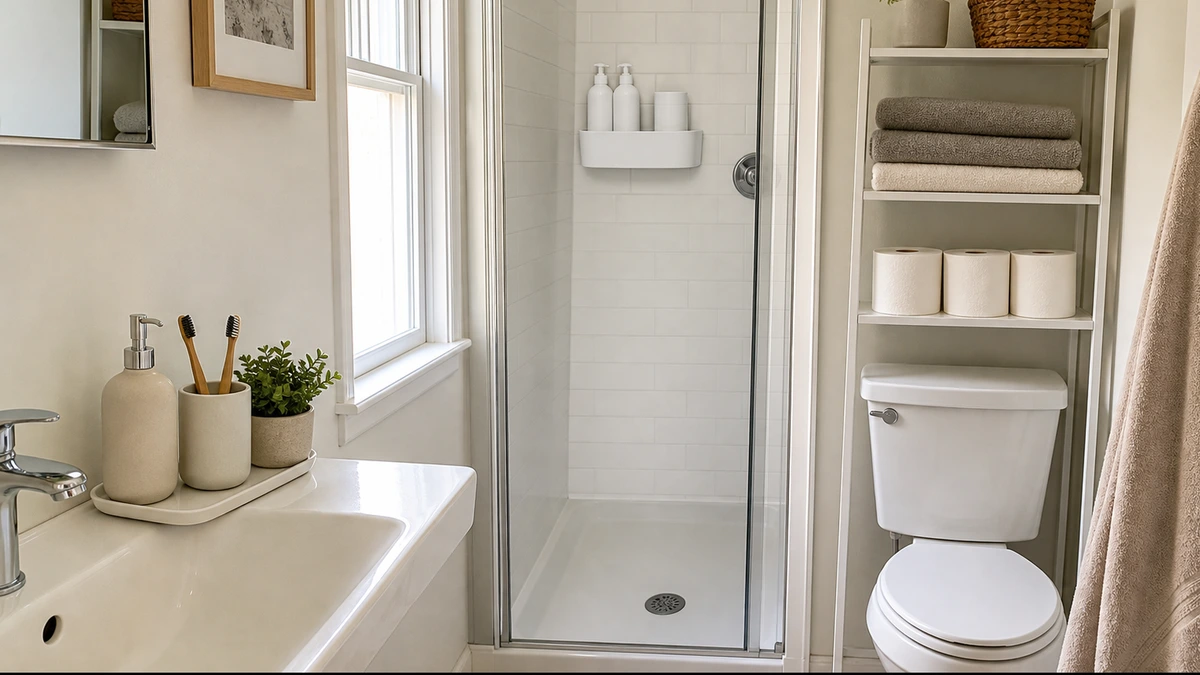
If your shower has smooth, flat tile or a fiberglass surround, adhesive wall caddies are the most practical fix. These rely on large, clear sticky pads that cling to the wall and feature built-in hooks to hold a wire or plastic basket.
Before you buy
Check this first
Before you attach anything to your shower wall, look closely at the material. Adhesive pads need a completely smooth, non-porous surface. They work well on large glossy tiles, glass, and smooth fiberglass. They do not work reliably on matte, textured tile, natural porous stone, or painted drywall. If you stick a heavy adhesive to painted drywall inside a bathroom, the moisture will eventually weaken the paint, and the adhesive will likely pull the top layer of paint off the wall when it falls.
Assuming your shower is compatible, application matters more than the brand. Scrub the wall with rubbing alcohol and let it dry completely. After pressing the adhesive pad to the wall, wait at least 24 to 48 hours before hanging the basket or adding weight. It is an annoying wait, but skipping it means your soap will end up back on the floor by morning.
When moving out, aim a hairdryer at the pad to soften the glue, then peel it back slowly. Keep in mind that “damage-free” is just marketing speak. There is always a slight risk of leaving a stubborn residue that requires some elbow grease to remove.
For an easier time keeping the actual shower clean once the bottles are off the floor, we have a separate guide on handling bathroom drain smells and shower grime.
Giving the Sink Edge a Boundary
When a sink has minimal counter space—or none at all, like a pedestal sink—things tend to spread outward until they reach the edge. Toothbrushes, razors, and heavy glass bottles blur into one precarious pile. One clumsy move sends half your routine crashing onto the tile.
Instead of buying highly specific organizers for every item, try a simple countertop tray.
A tray creates a firm physical boundary, telling you where the clutter is allowed to live. Practically, it makes cleaning much faster. When toothpaste drips, you only have to lift one tray to wipe down the porcelain, rather than picking up twelve individual bottles.
Prioritize wipe-clean materials like resin, ceramic, or thick plastic. Skip untreated wood, which will warp from humidity, or cheap metal that rusts and leaves orange rings. Look for a tray with a slight lip to catch spills, and ideally, small rubber feet so it doesn’t slide.
If you share the bathroom, discreet labels or clips on designated bins can stop daily friction over who left their items scattered across the shared sink.
Navigating the Under-Sink Cave
The cabinet under the bathroom sink is usually the largest storage area in the room, but deeply inefficient. It is essentially a tall, dark box interrupted by a plumbing pipe, meaning the top half is completely wasted.
Tossing loose items or open baskets in there guarantees things will get pushed to the back, forgotten, and eventually leak.
The most practical approach is a modular, stackable bin system with pull-out drawers. Drawers mean you don’t have to unstack a tower of bins just to reach a spare razor. They create custom shelving where none exists, utilizing the full height of the cabinet.
Measure your cabinet carefully before buying. You need the depth, the height, and crucially, the clearance around that center pipe.
Many renters buy wide drawer units only to find they cannot push them back because the plumbing is in the way. Often, the better move is buying two narrower sets of drawers to flank the pipe, leaving the middle section clear. This also leaves a direct line of sight to the shut-off valves.
Always assume the plumbing might drip. Stick to plastic or acrylic bins. Cardboard, woven fabric, or untreated wood will be ruined if a pipe leaks or heavy condensation builds up. For basic cleaning supplies to keep in these bins, we cover the essentials in our first apartment cleaning starter kit.
Using the Space Above the Toilet
The area above the toilet tank is often dead space. A slim over-toilet shelf can turn this blank wall into functional storage for spare toilet paper, folded towels, and lightweight toiletries.
Because you cannot drill into the wall, a freestanding shelf is usually the default option, but it comes with tradeoffs.
The biggest issue is wobble. Inexpensive tall metal racks sway easily. Look for a shelf with adjustable feet at the base so you can level it properly.
Pay close attention to the width and the height of the bottom support bar. The unit must be wide enough to straddle your toilet tank without pressing against the water supply line. The lowest crossbar must also sit higher than the plumbing connections, otherwise you won’t be able to push the shelf flush against the wall.
Storing things above the toilet means they are vulnerable to falling in. Always close the lid before reaching for anything. Keep small items in enclosed baskets or jars, and reserve the open bars for larger items. Leave enough clearance beneath the first shelf to comfortably reach the flush button and lift off the heavy porcelain tank lid if a plumbing issue arises.
Taking Advantage of the Door
The back of the bathroom door is a prime spot for hanging towels and bathrobes, keeping them off the floor. When you don’t have a towel bar, the door becomes your best option.
An over-the-door hook rack requires zero installation beyond dropping it over the top edge of the door.
Before buying one, check the gap between the top of your door and the door frame. Place a coin flat on top of the door, then try to close it. If the coin prevents the door from shutting or scrapes, you do not have enough clearance for a metal bracket. Forcing it will scrape the frame and eventually make the door stick.
If you have the clearance, pay attention to the hooks. Bathroom moisture is constant, so look for rust-resistant finishes or thick plastic options. Check how the organizer hangs. If it bangs against the hollow core of a cheap door, the noise will grate on your nerves. Add a small dot of mounting putty behind the bottom bar to stop the rattling without causing damage.
| Storage Type | Best For | Key Limitation |
|---|---|---|
| Adhesive Shower Caddies | Smooth tile and fiberglass | Can peel paint off drywall |
| Wipe-Clean Trays | Containing sink clutter | Takes up counter footprint |
| Modular Drawers | Under-sink organization | Must fit around plumbing pipes |
| Over-Toilet Shelves | Towels and toilet paper | Can wobble on uneven floors |
| Over-the-Door Hooks | Towels and bathrobes | Requires top-of-door clearance |
What Not to Buy First
When frustrated by a cramped space, it is tempting to buy the largest storage systems you can find. This usually leads to spending money on things that don’t fit or just get in the way.
Avoid giant tension-pole shower caddies right out of the gate. While they seem like a smart no-drill option, they require significant pressure to remain stable. In older apartments, this pressure can crack brittle plastic tub surrounds or leave permanent indentation rings on cheap ceiling drywall. If they slip, they bring all your heavy bottles crashing down.
Similarly, be highly skeptical of traditional suction-cup organizers. Standard suction cups rely on a perfect vacuum seal. As temperature and humidity fluctuate wildly, that seal weakens. Unless storing a single lightweight loofah, standard suction cups will eventually drop your items. Adhesive strips are much more reliable because they create a chemical bond.
Avoid bulky rolling carts unless you have physically measured the floor space. In a small bathroom, a cart often becomes an obstacle you have to constantly shove out of the way.
Start Small and Upgrade Later
The smartest way to organize a rental bathroom is to buy solutions one at a time. It requires patience, but it stops you from overbuying.
Start with the most annoying daily friction point. If kicking over shampoo bottles drives you crazy, measure your tile, check the surface texture, and buy just one adhesive shower caddy. Install it, wait the required curing time, and see how it holds up to a week of hot showers. If it works, you can buy a second one.
If the sink clutter is the main issue, buy a single tray. Use it for a few weeks to see if it actually changes your habits. If not, you only wasted a few dollars on a small tray, not an elaborate multi-tiered drawer system.
Buying organizers in phases prevents you from ending up with a bathroom full of empty plastic bins that take up more space than the clutter they were supposed to solve.
Frequently Asked Questions
Will adhesive wall organizers rip the paint off my bathroom wall?
Yes, they easily can. Heavy-duty adhesive is designed to hold weight in a humid environment. If applied to painted drywall, the bond is often stronger than the paint itself. When you pull it off, it will likely take a chunk of paint with it, leaving a patch you will have to spackle and repaint. Stick to applying adhesives only to smooth tile, glass, or solid fiberglass surrounds.
How do I remove heavy-duty adhesive from shower tile without damage?
Do not yank it off or pry it with a metal tool. Heat the adhesive pad with a hairdryer on high for several minutes to soften the glue. Slowly peel a corner back, continuing to apply heat as you go. If there is a sticky residue left behind, you can usually remove it with rubbing alcohol or a specialized adhesive remover.
My over-the-toilet shelf wobbles too much. What can I do?
First, tweak the adjustable leveling feet at the base to compensate for uneven tile. If it still wobbles, try placing a small rubber shim or folded piece of cardboard under the loose leg. Some renters use heavy-duty double-sided mounting tape to stick the back legs to the baseboard, but remember the previous advice about adhesives peeling paint.
Should I use cardboard boxes or woven baskets to organize under my sink?
No. The cabinet under the sink is prone to plumbing drips and condensation. Cardboard can absorb moisture, lose its shape, and turn musty. Woven fabric baskets will absorb spilled liquids and hold onto smells. Stick to plastic, acrylic, or coated wire bins, which are easy to wash out and will survive a minor leak.
Can I use tension rods for extra storage?
Yes, but with caution. A small tension rod installed inside the under-sink cabinet or shower can hold lightweight S-hooks for loofahs or spray bottles. However, avoid using heavy-duty tension rods wedged across the main walls to hang wet, heavy towels. The constant pressure required can warp the walls or leave permanent rings on the drywall.
Final Thoughts
Organizing a small rental bathroom is mostly an exercise in restraint. You cannot change the floor plan, you cannot move the plumbing, and you cannot drill into the tile.
The goal isn’t to create a perfectly styled space. The goal is to get your toothbrush off the edge of the sink, get your shampoo off the floor, and make it easier to find a clean towel.
By choosing practical, no-drill options like adhesive caddies for smooth tile, trays for the counter, and modular drawers under the sink, you can make the room significantly less annoying to use. Measure your spaces carefully, understand the limits of adhesives, and prioritize function over building a massive organizing system. Your lease will eventually end, and it is much easier to pack up a few well-chosen bins than a towering, wobbly shelf you never really liked anyway.
You can learn more about how we select and recommend practical items for renters on our About page, and you can read our full affiliate disclosure for details on how the site is funded.