Disclosure: This post may contain affiliate links. If you buy through these links, we may earn a commission at no extra cost to you.
You know the drill. You walk across an exposed asphalt lot in July, hit unlock, and pull the door handle. Before you even sit down, a wall of stale, superheated air hits you in the face.
You hold your breath, drop into the driver’s seat, and immediately regret making contact with the dark upholstery. You reach for the steering wheel with just your fingertips, wincing because the top edge is too hot to grip. Then you fumble for the seatbelt, trying to keep the bare metal latch from stinging your leg.
You crank the air conditioning to maximum. For the next few minutes, it just blasts warm, noisy air directly at you.
Those first five minutes are genuinely miserable. The air conditioning will eventually catch up. Until it does, you are sitting inside a greenhouse on wheels.
You cannot make a car parked in direct sunlight feel like a refrigerator. That requires actual horsepower and time. But you can make those initial minutes significantly less annoying. The goal is to address specific friction points: the steering wheel that is too hot to hold, the dashboard radiating heat like an open oven, and the small items in your console slowly baking in the afternoon sun.
Quick answer
The short version
If you want the quickest way to cool down a parked car, start by rolling down the passenger side window. Then, stand outside the driver’s side and open and close the driver’s door firmly a few times. This forces the hot air out and pulls slightly cooler outside air in.
Once inside, roll down all the windows and start driving. Turn the AC on, but use the fresh air setting—not the recirculate setting. After a minute or two, when the air coming from the vents is colder than the air outside, roll up the windows and switch the AC to recirculate.
To stop the surfaces from getting so hot in the first place, block the windshield with a shade and cover the touch points before you leave the car.
Before you buy
Check this first
Measure the height and width of your windshield from the inside before you buy a sun shade. Many shades are sold in generic sizes, so check the manufacturer’s sizing chart against your actual measurements. A shade that is too small lets light leak in, and a shade that is too large will sag and eventually damage your rearview mirror mount. For more on how we approach gear, read how Useful Nook chooses useful finds.
Shielding the Windshield
The largest piece of glass on your car is the windshield. It is angled specifically to catch sunlight, turning your dashboard into a massive heat sink that continues to radiate warmth into the cabin long after you start the engine.
A windshield sun shade is the single most effective barrier you can put up. It does not stop the cabin air from getting hot, but it prevents the sun from directly baking the steering wheel, the dashboard, and the front seats.
Traditional accordion-style foil shades are cheap and effective, but they are clumsy to fold and take up a lot of space in the passenger footwell or backseat. If you frequently have passengers, storing a stiff, metallic rectangle is annoying.
Shades made of thin fabric over flexible wire rings are much easier to stash. They twist down into a small circle that fits in a seatback pocket or the door bin. The tradeoff is that they can be tricky to wrestle back into shape if you have not practiced the folding motion.
Umbrella-style shades push open like a rain umbrella and prop against the dashboard. They are very quick to set up and take down. However, the metal handle often rests heavily on the infotainment screen or center console. If you have a large screen protruding from the dash, an umbrella shade might scratch it or put too much pressure on the display.
Handling the Hot Touch Points
Ambient heat is uncomfortable, but contact heat is what actually hurts.
If you park facing the sun without a shade, the steering wheel absorbs heat for hours. Gripping it requires you to constantly shift your hands or steer with the very bottom edge of the rim. A permanent steering wheel cover adds a layer of insulation between your hands and the hot material, which can make the wheel slightly easier to hold. If you go this route, check the grip and fit carefully. The cover must fit tightly. If it slips at all when you turn the wheel, it becomes a driving hazard. Thick covers also change the feel of the wheel significantly, which takes getting used to.
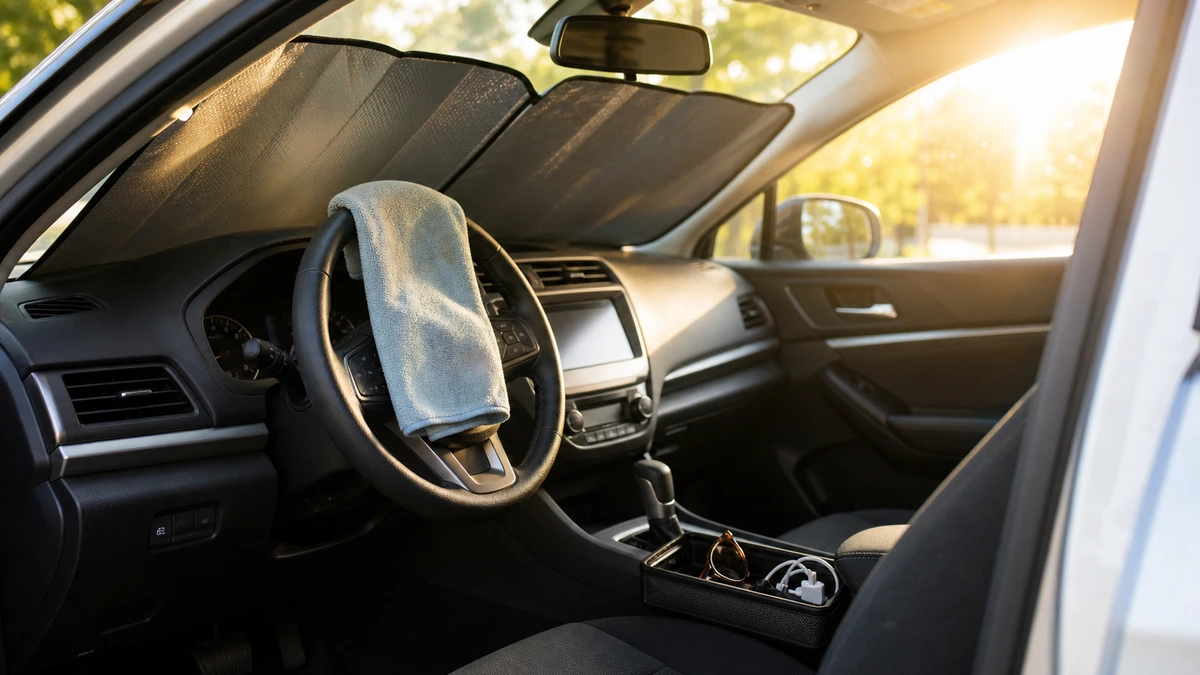
If you dislike the bulk of a permanent cover, simply keep a small, light-colored microfiber towel in the door pocket. Drape it over the top half of the steering wheel before you leave the car. It is a zero-cost habit that makes the wheel much more manageable when you return. Some companies sell slip-on towel-style covers designed just for parking. They work fine, but an ordinary towel does the exact same job and can also wipe down the dusty dashboard.
The metal tongue of the seatbelt often sits in the direct path of the sun through the side windows. When you sit down and grab it, the metal can sting. You can buy silicone or fabric seatbelt buckle covers that slide over the receptacle to reduce that initial shock. If you use these, check them carefully. They must not interfere with the latching mechanism. You should still hear a clear, sharp click when you buckle in, and the release button must remain completely unobstructed. If the cover makes it harder to buckle or unbuckle, remove it immediately. A simpler habit is to buckle the seatbelt into the empty passenger seat before you leave the car. This hides the metal tongue from the sun entirely.
Managing the Dashboard and Center Console
It is easy to forget about the small things left in the cabin until you reach for them. A tube of lip balm left in the cupholder turns to liquid. Sunglasses left on the dashboard become too hot to put on your face. Charging cables soften in the heat, and receipts curl up and blow around.
Dashboard mats are useful for holding sunglasses or a phone while parked, but they take a beating from the sun. If you buy a silicone or rubber dashboard anti-slip mat, check its heat tolerance rating. Cheap mats can degrade in extreme heat, melting slightly and leaving a sticky residue on your dashboard that is incredibly difficult to clean. It is generally better to avoid leaving anything on the dashboard in the summer.
When you drop your phone or a debit card between the seat and the center console, fishing it out in a sweltering car is frustrating. A seat gap organizer or small car pouch slides into that narrow space to catch dropped items. Check the fit around your seat rails and seatbelt buckles. The organizer should sit securely without sliding around when you brake. Also, make sure it does not block access to your seat adjustment controls.
Rear and Side Windows
The windshield lets in the most light, but the side windows contribute heavily to the greenhouse effect. If you park in an exposed lot all day, side-window shades can help block the sun from baking the seats and the seatbelt hardware.
There are suction-cup shades and mesh shades that pull over the entire door frame like a sock. The mesh door covers are highly effective at blocking the sun while allowing you to roll the window down slightly for ventilation.
However, use these strictly for parking shade zones. Do not use opaque shades or dark mesh covers on the front side windows while driving. They block your peripheral vision and your ability to check blind spots safely. Remove them completely before putting the car in gear.
| Accessory Type | Primary Benefit | The Tradeoff |
|---|---|---|
| Accordion Sun Shade | Cheap, highly effective heat block | Bulky, hard to store with passengers |
| Pop-up Sun Shade | Folds down into a compact circle | Takes practice to twist and fold |
| Microfiber Towel | Zero-cost steering wheel cover | Can slide off easily if bumped |
| Seat Belt Cover | Reduces discomfort from hot metal | Can interfere with the latch if poorly fitted |
| Mesh Window Sock | Blocks side sun, allows ventilation | Must be removed from front windows before driving |
Start Small, Upgrade Later
Before buying a full set of heat-blocking gear, start with the free habits. Use a towel you already own to cover the steering wheel and buckle your seatbelt into the empty passenger seat when parked. If those small adjustments solve the worst of your contact heat problems, you can stop there.
If you still find the cabin unbearable, add a windshield sun shade. That is the single most effective upgrade you can make. Only move on to seat gap organizers or side window mesh if you park in an exposed lot all day and find your side surfaces are still getting baked.
What Not to Buy First
When you are tired of getting into a hot car, it is tempting to buy a gadget that promises active cooling.
Do not bother with small, 12-volt mini air conditioners that plug into the cigarette lighter or USB port. These are usually just tiny fans blowing over a wet sponge or an ice pack. In a small, sealed, already-humid environment like a car interior, they do almost nothing. You need the car’s actual AC compressor to remove heat and humidity.
A small, battery-operated portable fan or a USB fan that clips to the air vents is slightly more useful, but keep your expectations realistic. A fan does not cool the air; it only moves it. Pointing a fan at yourself when you first get in can help evaporate sweat, making you feel slightly cooler while you wait for the car’s AC to kick in. Just ensure it does not block your view of the infotainment screen or important dashboard warning lights. Treat it strictly as a temporary airflow aid.
Frequently Asked Questions
Does cracking the windows actually keep the car cooler?
It helps slightly, but not enough to matter. Leaving the windows open an inch allows a small amount of hot air to escape, which might keep the cabin temperature from reaching its absolute maximum peak. However, the interior will still be dangerously hot. You also have to weigh the slight reduction in heat against the risk of theft or a sudden rainstorm.
Should I run the AC on recirculate or fresh air when I first get in?
Start with fresh air. When you first turn on the car, the air inside the cabin is much hotter than the air outside. If you use recirculate, the AC system has to work harder to cool down that superheated trapped air. Roll the windows down, set the AC to fresh air, and drive for a minute or two to push the hot air out. Once the air blowing from the vents feels colder than the outside air, roll the windows up and switch to recirculate.
Does window tinting replace the need for a sun shade?
Window tinting reduces the amount of solar energy entering the car, which helps keep the interior cooler over time and protects the upholstery from fading. However, it does not completely stop heat transfer, especially through the large, un-tinted windshield. Even with tinted side windows, a windshield sun shade remains the most effective tool for preventing the dashboard and steering wheel from baking.
A Crucial Note on Safety
The first few minutes in a sun-baked car are never going to be pleasant. There is no cheap accessory that replaces a strong air conditioning system.
More importantly, accessories like sun shades, steering wheel covers, and fans are strictly for managing your personal discomfort when you first enter a parked car. They do not make a parked car safe.
A car parked in the sun acts like a greenhouse. The temperature inside can spike to dangerous levels in minutes. Cracking the windows does very little to slow this down.
Never leave people, children, or pets in a parked car. Even for a few minutes, even with the windows cracked, and even with a sun shade up, the interior heat is severe. If a person or an animal is involved, cooling accessories are completely irrelevant. The only safe option is to take them with you.