Disclosure: This post may contain affiliate links. If you buy through these links, we may earn a commission at no extra cost to you.
You arrive at the hotel, drop your bag on the floor, and pull the zipper. Inside, the neat stacks you packed have shifted into a dense, settling mound of fabric.
Your phone is dying, and the charging cable is pinned under stiff jeans. A shampoo bottle leaked slightly, making your canvas toiletry pouch smell heavily of coconut conditioner. By day two, clean outfits and worn socks inevitably share the same corner.
When a short trip feels this chaotic, the usual reaction is to assume you need a bigger suitcase. But upgrading luggage usually just gives your clothes more room to tumble, adding unnecessary weight and hassle.
The real issue is rarely a lack of space. It is a lack of structure.
Before spending money on a larger bag, compartmentalize the one you have. The goal isn’t a mountain of rigid accessories. It is finding a few flexible organizers that solve the friction of traveling out of a small space.
Quick answer
The short version
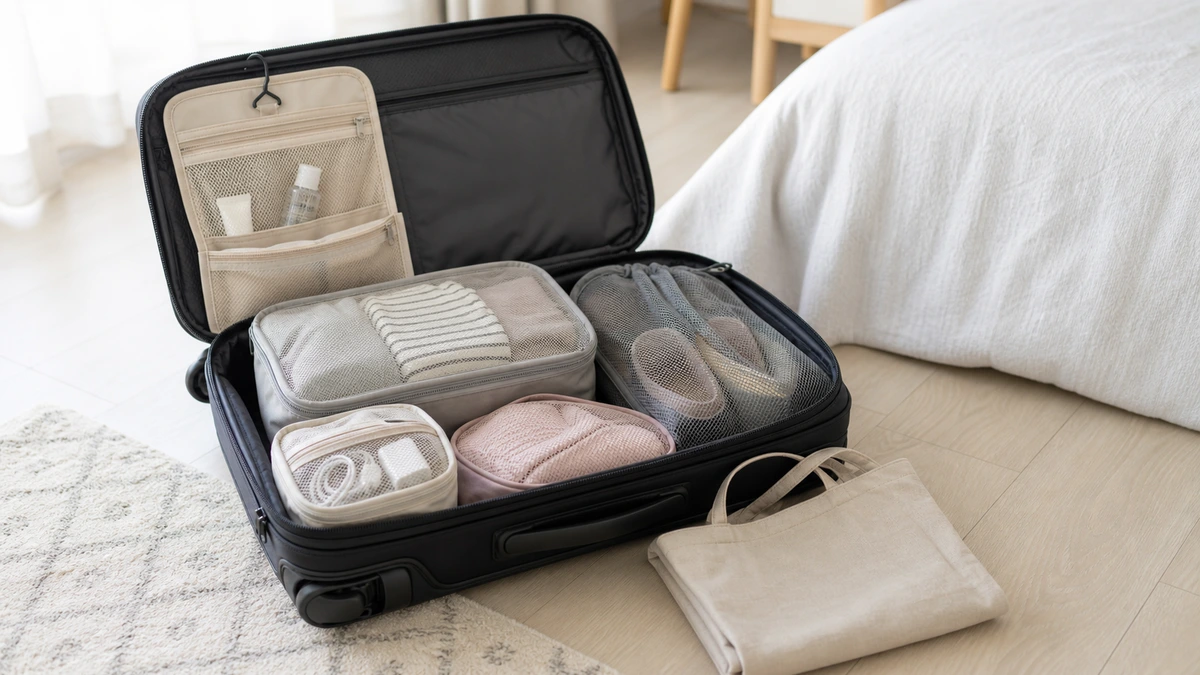
To make a small suitcase work, stop packing items loose. Start with soft packing cubes to separate clothing by type or day. Add a hanging toiletry bag to keep liquids off tiny hotel counters. Use a dedicated cable pouch so chargers stay near the top zipper, and pack a washable bag to maintain a clear boundary between clean clothes and dirty shoes.
The Core Problem with Small Bags
A small suitcase works perfectly until you need one specific thing.
Digging for a fresh t-shirt instantly destroys whatever folding strategy you used at home. Without internal boundaries, pulling one item out disturbs everything else.
Organizers fix this by turning an empty, chaotic cavern into removable drawers. Instead of packing a void, you pack purpose-driven compartments. Grab the tech pouch for a cable or the smallest cube for socks. The rest of your belongings stay compressed and undisturbed. This modular approach also makes repacking significantly faster—you just slot three or four neat blocks back into place.
Packing Cubes: Stopping the Spread
When packed loose, clothes drift. Zipping them into soft fabric blocks forces them to maintain their footprint.
Group these cubes by category (tops, pants, undergarments) or by outfit. Look for cubes with front mesh panels so you can see inside without unzipping every block to find a gray sweater. Pay attention to dimensions: a cube wider than your carry-on’s interior will warp and waste space.
If volume is your main issue, compression cubes feature a second outer zipper that squashes excess air out of bulky items like fleece pullovers. Just remember that compression reduces volume, not weight. Your bag will feel much denser.
The Wet/Dry Divide: Toiletries and Liquids
Hard-sided toiletry cases waste enormous space, while loose plastic bags are a gamble against cabin pressure.
A hanging toiletry bag is the practical middle ground. Hotel counter space is often non-existent. A hanging bag uses the back of the bathroom door or a towel rack, keeping items accessible but out of the way. Prioritize a wipeable waterproof lining and a durable metal swivel hook.
To save space, ditch standard travel bottles for short trips. Use small, screw-top cosmetic containers or leak-proof silicone tubes, transferring only the exact amount you will use.
The Tech Black Hole: Managing Cords
Chargers, adapters, wireless earbuds, and small electronics are dense and physically small. Packed loose, gravity pulls them to the absolute bottom of your bag.
This creates a specific stress: sitting on a hotel bed, exhausted, blindly digging for a phone cord. A dedicated, soft-sided nylon electronics pouch solves this. Keep it packed near the main zipper so you can grab it without fully opening the suitcase. Look for elastic loops to hold cords tightly and zippered mesh pockets for adapters. Avoid rigid, armored cases that demand a fixed block of room.
The Clean/Dirty Line: Shoes and Laundry
Shoes are covered in street dirt. By the second evening, worn socks and wrinkled shirts accumulate. Without an isolated place for them, they mix with pristine clothes.
A simple shoe bag prevents dirt transfer. A separate, lightweight, breathable laundry bag gives you a specific dump zone for worn items. As the trip progresses, packing cubes empty and the laundry bag fills, but the categories never cross-contaminate. Avoid completely sealed plastic bags, which trap moisture and leave your suitcase smelling stale.
The Arrival Safety Net: Foldable Totes
Sometimes you need a functional bag after you arrive to carry groceries, beach gear, or laundry. A packable tote or collapsible nylon daypack folds to the size of a deck of cards but expands instantly. Check the shoulder strap stitching, where cheap bags tear first, and ensure the folded footprint slides easily into your suitcase’s front pocket.
Optional Packing Tools
If you fly budget airlines, a handheld luggage scale prevents unexpected ticketing fees. For identifying a generic black bag on a crowded cart, a luggage tag helps—prioritize designs with a physical privacy flap so your home address isn’t visible in the security line.
A brief reminder regarding air travel: Always verify current airline and airport security rules regarding the sizes of liquid containers, the handling of batteries, and restricted items before heading to the airport.
Before you buy
Check this first
- Measure your bag: Do not guess. Measure the interior dimensions of your weekend bag and compare them directly to the packing cubes you are considering.
- Test the zippers: The zipper should glide smoothly with one hand. If it catches the lining, it will drive you crazy.
- Check washability: If an organizer cannot survive a standard cold cycle in your washing machine, it will eventually become too dirty to use.
- Evaluate base weight: Organizers should be made of lightweight nylon or ripstop polyester. Empty organizers shouldn’t add pounds to your luggage.
| Organizer Type | The Friction It Solves | Key Feature to Look For |
|---|---|---|
| Basic Packing Cubes | Clothes turning into an unmanageable pile. | Mesh panels for visibility; strong zippers. |
| Compression Cubes | Bulky clothing consuming too much volume. | Heavy-duty secondary compression zippers. |
| Hanging Toiletry Bag | Tiny counters and leaking liquid bottles. | Sturdy metal hook; wipeable interior. |
| Tech / Cable Pouch | Lost chargers and tangled cords at the bottom. | Elastic interior loops; soft flexibility. |
| Shoe Bag | Street dirt touching clean packed clothing. | Machine washable material; proper sizing. |
| Foldable Tote | Needing a temporary bag at the destination. | Reinforced handle stitching; small footprint. |
Start Small, Upgrade Later
Resist the urge to buy a 15-piece matching set. You will likely only use three pieces, leaving the rest in a closet.
Phase 1: The Basics
Address the worst part of your routine: your clothing compartment and toiletries. Get three or four basic packing cubes and a hanging toiletry bag. Use a plastic grocery bag for shoes for now. See how this changes the feel of your bag on one trip.
Phase 2: Targeted Upgrades
Notice what still annoys you. Tangled cables? Add a tech pouch. Struggling with thick sweaters? Upgrade to compression cubes. Buy new organizers only to solve recurring annoyances.
What Not to Buy First
Rigid Organizer Cases: Hard-shell tech organizers and structured toiletry boxes demand unyielding blocks of space, creating dead pockets of air. A small weekend bag relies on the flexibility of soft nylon.
Oversized Toiletry Bags: Many kits are secretly designed for two-week family vacations. Scale your organizers aggressively to the length of your trip.
Too Many Tiny Cubes: Micromanaging luggage adds unnecessary bulk and zipper weight. Stick to broad categories so you aren’t unzipping six tiny pouches just to get dressed.
FAQ
What is the difference between regular packing cubes and compression cubes?
Regular packing cubes act like soft drawers to keep clothes organized and stop them from drifting. Compression cubes do the exact same thing, but they feature a secondary outer zipper that squeezes out excess air to flatten bulky items like sweaters. Keep in mind that compression saves volume, not weight.
Do packing organizers actually save space in a small suitcase?
Yes, by eliminating dead zones. While the thin nylon of the organizers takes up a tiny fraction of room, containing your clothes prevents them from expanding into a tangled pile. It allows you to pack the interior shape of your bag much more intentionally.
What should I check before flying with liquids and electronics?
Always verify the current airline and airport security rules for liquid container sizes, batteries, and restricted items before you leave. The rules can change by country, airport, and airline, so treat any organizer as a packing aid, not a substitute for checking the current requirements.
The Final Take
Packing for a short trip shouldn’t feel like a high-stakes puzzle where one wrong move ruins your bag’s arrangement. A weekend bag is fundamentally supposed to offer freedom and easy mobility.
When you stop treating your suitcase as a single, open bucket and start treating it as a structured frame to hold smaller compartments, the friction naturally disappears. Start with a few mesh cubes, corral your liquids into a hanging bag, and see how much easier it is to live out of a small suitcase when everything stays exactly where you put it.