Disclosure: This post may contain affiliate links. If you buy through these links, we may earn a commission at no extra cost to you.
Bugs usually get inside through boring little weak spots: a torn screen, a gap under the door, a sticky drain, a fruit bowl, an uncovered trash bin, or crumbs hiding beside the stove. That is good news, because many no-spray fixes are small, cheap, and renter-friendly.
This guide focuses on prevention, not miracle cures. If you already have a serious infestation, biting insects, termites, bed bugs, roaches spreading through walls, or anything that creates a health or safety risk, call a qualified pest professional. But if you are dealing with the everyday summer mix of mosquitoes, gnats, flies, ants, and tiny crawlers, start with the physical barriers and cleaning fixes below.
Quick answer
The short version
The best no-spray bug-proofing starts with blocking entry points and removing easy attractants. Check screens, seal door gaps, clean drains, cover food, control trash odors, and use airflow where flying insects gather.
- Start first: inspect window screens, door gaps, drains, trash, and fruit bowls.
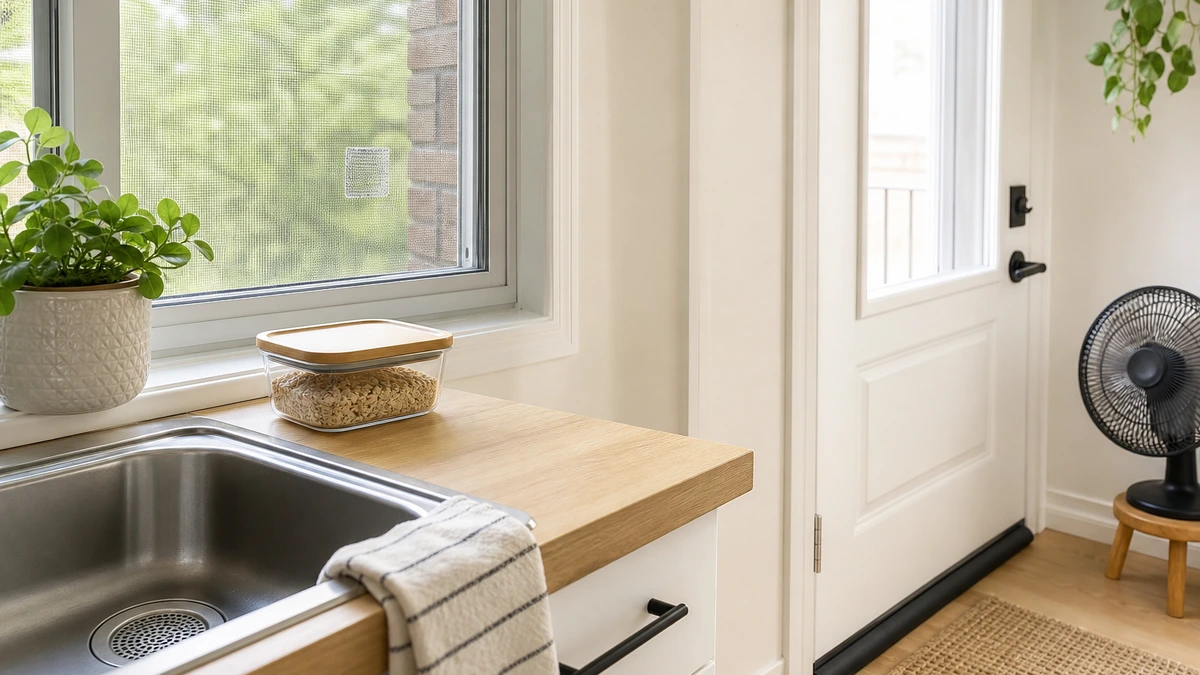
- Best renter-friendly fixes: screen repair tape, door draft stoppers, drain strainers, mesh food covers, and small fans.
- Call a pro if: pests are spreading fast, you see droppings, nests, repeated bites, structural damage, or the problem keeps returning after basic fixes.
Before you buy
Check the source first
- Flying insects: look at screens, open doors, fruit, drains, trash, and standing water.
- Crawling insects: check door thresholds, countertop gaps, baseboards, crumbs, pet food, and damp areas.
- Gnats or fruit flies: clean drains, remove overripe produce, rinse bottles/cans, and empty food waste more often.
- Repeated activity: do not keep buying gadgets if the same pest problem returns every week. Find the entry point or attractant.
Which no-spray fix should you try first?
| If you notice… | Try first | Why it helps |
|---|---|---|
| Mosquitoes or flies near open windows | Patch screens and check frame gaps | It blocks the easiest flying-insect entry point. |
| Bugs near exterior doors | Add a door sweep or draft stopper | It closes the low gap crawling insects use. |
| Gnats around the sink | Clean drains and use a drain strainer | It removes the food source and breeding area. |
| Fruit flies near produce | Cover fruit and remove overripe items | It reduces the smell and access that attract them. |
| Flies near trash | Use a lidded bin and empty food waste sooner | It contains odor and cuts off easy food access. |
| Mosquitoes around seating areas | Use a small fan | Air movement makes landing harder for weak fliers. |
1. Patch or replace worn window screens
A tiny tear in a window screen can be enough for mosquitoes, gnats, and small flies. Check every screen for holes, fraying edges, bent frames, and gaps where the screen no longer sits tightly.
For a small tear, screen repair tape or a small patch can work as a quick fix. If the whole screen is brittle, loose, or missing, replacement is usually the better long-term move.
Check before buying:
- Mesh size: finer mesh blocks smaller insects but may reduce airflow slightly.
- Frame fit: a perfect screen still fails if the frame leaves side gaps.
- Rental limits: choose removable repair options if you cannot modify the window frame.
2. Seal door gaps with a door sweep
If you can see light under an exterior door, bugs can often use that space too. A door sweep, draft stopper, or adhesive weather strip can close the gap without a major project.
The goal is a snug seal that still lets the door open and close smoothly. If the sweep drags, curls, or peels off, it will become annoying fast.
Check before buying:
- Gap height: measure the actual space under the door.
- Floor type: thick rugs and uneven thresholds can catch some sweeps.
- Install style: adhesive options are renter-friendly; screw-in options are sturdier but more permanent.
3. Use a magnetic mesh screen for busy doors
Patio doors and back doors are bug highways because they open often. A magnetic mesh screen can help when a traditional screen door is missing, inconvenient, or not allowed in a rental.
These screens attach around the door frame and close with magnets down the middle. They are not elegant forever, but they can be useful for summer, pets, kids, and high-traffic doors.
Check before buying:
- Door size: measure height and width, including trim.
- Closure strength: weak magnets can leave a center gap.
- Attachment method: adhesive strips are easier to remove; tacks may damage trim.
4. Keep drains clear and covered
Kitchen and bathroom drains can feed gnats and fruit flies when organic buildup sits inside the pipe. A drain brush, regular hot-water flushes, and a simple strainer can help reduce the mess that attracts them.
Avoid thinking of drains as a one-time fix. If food scraps, soap film, or hair keep collecting, the problem can come back.
Check before buying:
- Drain size: strainers and covers should sit flat and not block normal use.
- Cleaning access: choose tools you will actually use weekly.
- Kitchen safety: do not mix random cleaning chemicals in drains.
5. Use lidded trash bins and manage food waste
Open trash bins make flies and gnats harder to control. A tight-fitting lid, smaller food-waste container, or more frequent emptying can make the kitchen much less attractive.
If food scraps sit overnight, especially fruit peels, meat packaging, or sweet drink residue, flies have a reason to stay.
Check before buying:
- Lid fit: a loose lid is mostly decorative.
- Bin size: smaller bins can be better if they force more frequent emptying.
- Cleaning: smooth plastic interiors are easier to rinse than textured bins.
6. Cover exposed food with mesh food covers
Fruit bowls, pastries, picnic plates, and countertop snacks can attract flies even in a clean kitchen. Mesh food covers create a simple physical barrier while still letting produce breathe.
They are especially useful if you keep bananas, berries, tomatoes, or baked goods out during the day.
Check before buying:
- Size: the cover should fit your fruit bowl or plate without touching the food.
- Storage: collapsible covers are easier to keep in small kitchens.
- Cleaning: choose mesh that can be rinsed and dried easily.
7. Boost airflow with small fans
Mosquitoes and many flying insects are weak fliers. A small fan near a seating area, window, or patio door can make it harder for them to land.
This does not seal your home, but it can make a big difference in the exact spot where you sit, cook, or eat.
Check before buying:
- Placement: a fan only helps where the airflow reaches.
- Noise: quiet matters if you use it near a desk, bed, or dining table.
- Power: USB or rechargeable fans are easier to move around.
8. Fill countertop gaps and crevices
The gap between a stove and countertop can collect crumbs, oil, and dust. Those tiny food sources can attract ants and other crawling insects. Gap covers or easy-clean inserts can reduce both mess and hiding spots.
Do not seal anything that needs ventilation or access. Keep this to simple counter gaps, backsplash cracks, and crumb traps you can safely clean.
Check before buying:
- Gap width: measure the widest part, not just the neatest-looking section.
- Heat exposure: use materials appropriate for the stove area.
- Cleaning: removable covers are easier to wash than permanent fixes.
9. Declutter and clean hidden spots
Bugs like places that stay dark, dusty, damp, or full of forgotten crumbs. Look behind appliances, under the sink, under furniture, inside pantry corners, and around pet feeding areas.
This is not about making your home perfect. It is about removing the quiet food sources and hiding places that let a small problem linger.
Check first:
- crumbs beside the stove or toaster;
- sticky residue under trash bags;
- pet food left out overnight;
- cardboard boxes in damp areas;
- forgotten produce or pantry spills.
A one-hour bug-proof reset
If the list feels too long, do this one-hour version first:
| Time | Task | Result |
|---|---|---|
| 10 minutes | Check screens and door gaps | Find the obvious entry points. |
| 10 minutes | Remove overripe fruit and rinse bottles/cans | Cut down fly and gnat attractants. |
| 15 minutes | Clean sink drains and add strainers | Reduce gnat breeding spots. |
| 15 minutes | Clean hidden crumb zones | Remove easy food sources for ants and crawlers. |
| 10 minutes | Set up a fan or food cover where needed | Protect the highest-use zone first. |
When to call a professional
No-spray home fixes are useful for prevention and small annoyances. They are not a replacement for professional help when the issue is persistent, spreading, or risky.
Call a qualified pest professional or your landlord/property manager if you notice:
- bed bugs, termites, or repeated roach activity;
- droppings, nests, structural damage, or chewing marks;
- pests returning quickly after cleaning and sealing;
- insects around electrical areas, walls, ceilings, or major water leaks;
- bites, allergic reactions, or any health concern.
FAQ
What are common entry points for bugs around windows and doors?
Common entry points include torn screens, gaps where screens meet frames, spaces under exterior doors, worn weatherstripping, and doors left open during high-traffic times.
How can keeping drains clear reduce gnats?
Drains can collect organic buildup that feeds gnats and fruit flies. Cleaning the drain, catching food scraps with a strainer, and keeping seldom-used drains covered can reduce that attraction.
Are these fixes suitable for a small apartment?
Yes. These fixes are especially useful in small apartments because one open trash bin, torn screen, or sticky drain can affect the whole space quickly. Use removable, renter-friendly products when you cannot drill or permanently seal something.
Do no-spray methods completely eliminate bugs?
Not always. They reduce entry points and attractants, which can make everyday pest problems much smaller. Serious or repeated infestations need professional inspection.
Final take
Bug-proofing without sprays works best when you think like a maintenance checklist: block the path in, remove the food source, reduce hiding spots, and protect the places where you actually spend time.
Start with screens, door gaps, drains, trash, exposed food, airflow, and hidden crumbs. Those small fixes will not solve every pest problem, but they can make your home much less inviting to everyday bugs.